



Sylvia Ordoñez
Oil and Mixed technique on canvas and masonite
36-1/4 x 29-3/4"
Signed
1981
$74,000.00 plus shipping
Available
Description
Some paintings decorate; this one radiates. This painting by Sylvia Ordoñez is an early work by one of the most celebrated painters of northeastern Mexico.
Painted in 1981, the same year Ordoñez returned to Mexico after studying printmaking at the Escola de Llotja in Barcelona and mounted her solo exhibition at Galería Miró in Monterrey, this painting captures the artist at a fascinating moment of transition, before the lush fruits and still lifes of her mature period. Sylvia Ordoñez (b. Monterrey, 1956) studied in Paris, at the Slade School of Fine Art in London, and in Barcelona, and won first prize at the 5th Congress of Pictorial Art in Monterrey while still in her twenties. Her work has been exhibited internationally, including *Women in Mexico* at the National Academy of Design in New York (1990), ARCO Madrid, Art Chicago, and the Katonah Museum. In 1993, she was honored with a retrospective at MARCO, Museo de Arte Contemporáneo de Monterrey. She is the daughter of acclaimed painter Efrén Ordóñez, but her artistic voice is entirely her own: where her father worked with bold color and strong composition, Sylvia cultivated an intimate, sensorial style steeped in nature that has made her one of the defining artists of Nuevo León.
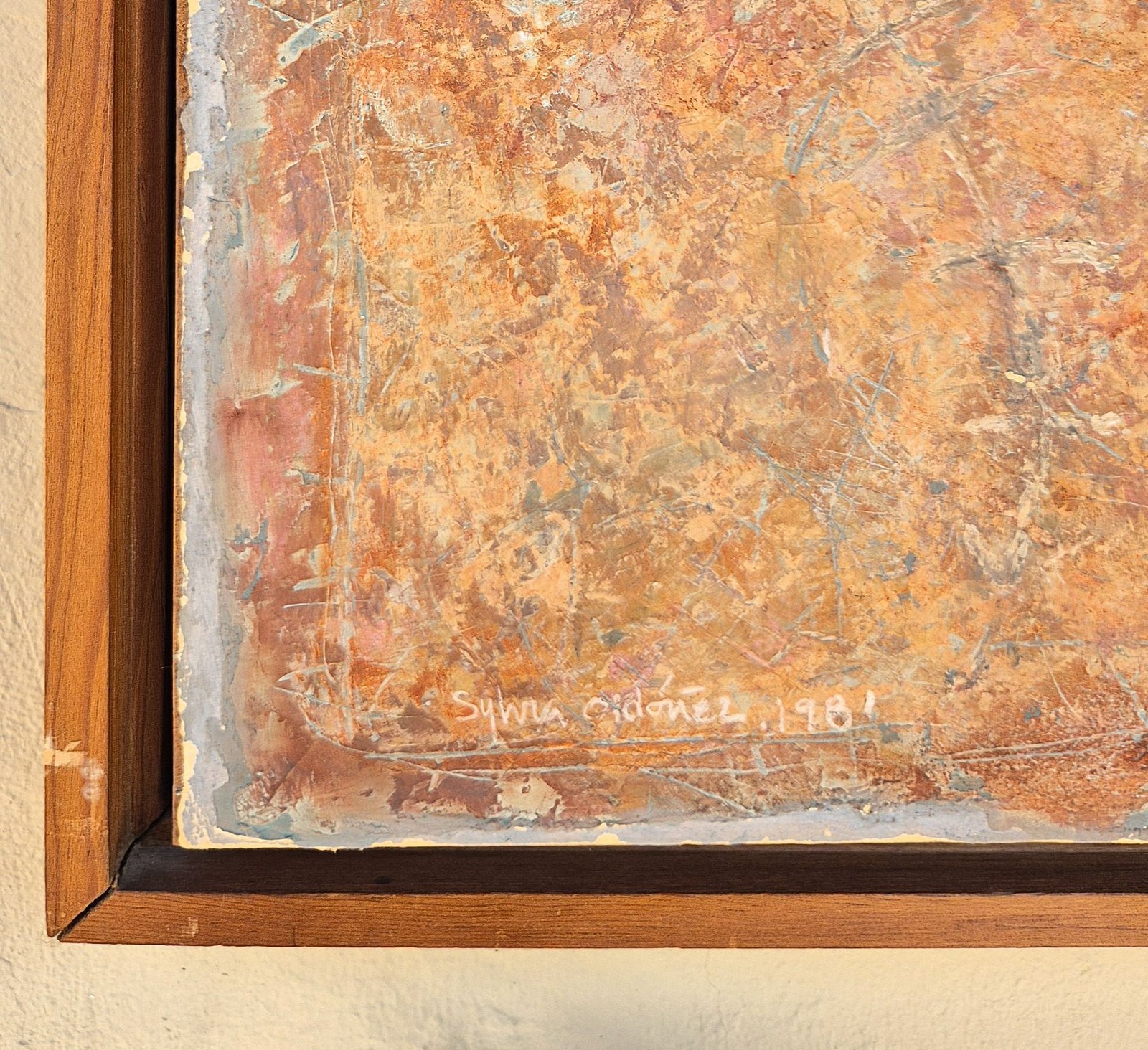
The work is an original painting on canvas adhered to a Masonite board, a support consistent with the artist’s documented practice of working on canvas mounted on board, often using oil and encaustic (pigment suspended in wax). The matte, waxy depth of the surface, layered mottling, and incised line work visible here are highly characteristic of her encaustic-on-canvas-on-board works from this period. Signed “Sylvia Ordoñez 1981” by the artist at lower left. Presented in its original wooden frame.
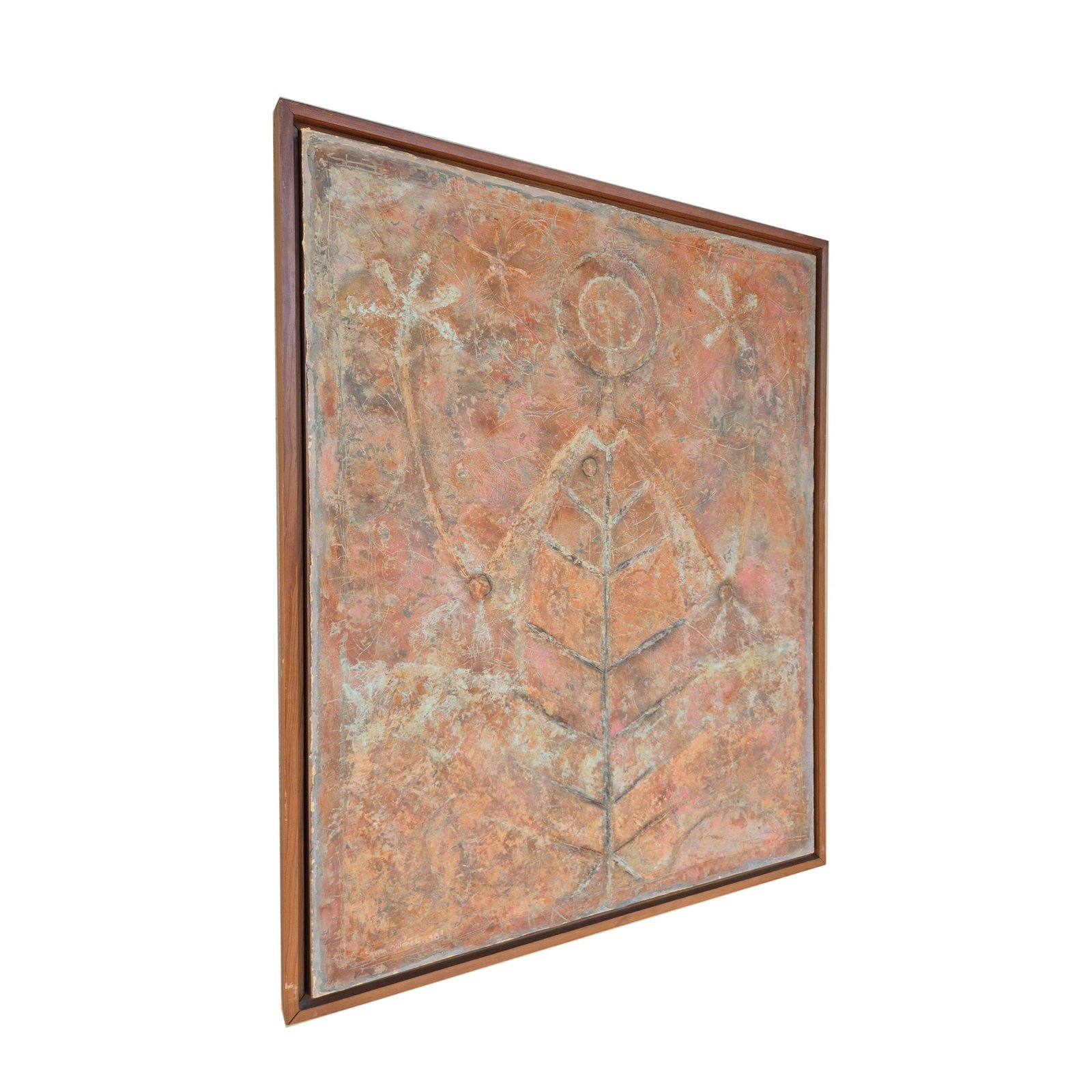
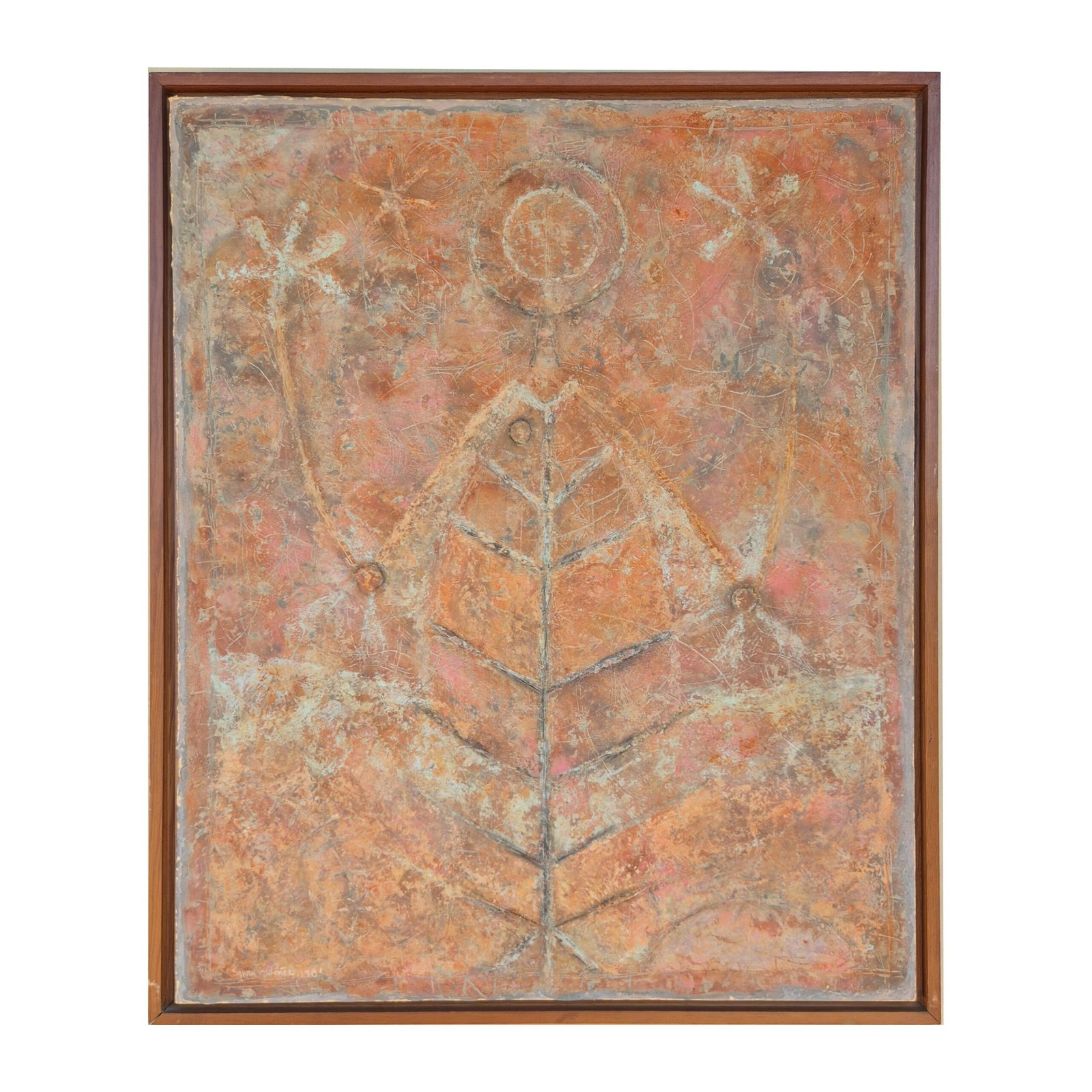
What first draws the eye is the way the central figure seems to grow upward from the bottom of the composition. The vertical axis functions almost like a stem, a spine, or a backbone. Successive diagonal lines branch from it, creating an almost geometric structure. Ordoñez seems to have deliberately erased the boundaries between animal, plant, landscape, and human figure.
If we look at the central form from the middle upward, we can imagine a fish seen head-on, its mouth open. The vertical axis becomes its body, while the diagonals can be read as scales or as the internal divisions of the body. The central structure also bears a striking resemblance to a leaf seen from the front: the central axis becomes the main vein, while the diagonal lines become secondary veins. Yet if we mentally extend the form downward, the leaf begins to transform into a tree. At the same time, if we take the upper circle as a head, the central structure can become a human figure dressed in a triangular robe. The cross- or star-like forms on either side of the head recall the open hands of the solar and ritual figures of Rufino Tamayo, an artist whose influence Ordoñez shares. If we read those forms as three stars in the night sky, the composition takes on an almost cosmic structure.
It is a painting of matter and metamorphosis, in which a central, almost archetypal form oscillates between the vegetal, the animal, the human, and the cosmic. Its earthy palette—ochres, oranges, muted pinks, whites, and grays—makes it feel like an ancient image uncovered beneath layers of time. The incisions and abrasions reinforce the sensation that we are looking at a sign that might have emerged from a dream, a memory, or an imaginary culture. And perhaps the most beautiful quality of the painting is that it does not require the viewer to choose a single interpretation. Its ambiguity is precisely its content. This makes the work far more intriguing than a simple geometric abstraction: it is almost a machine for generating images within the viewer’s imagination.
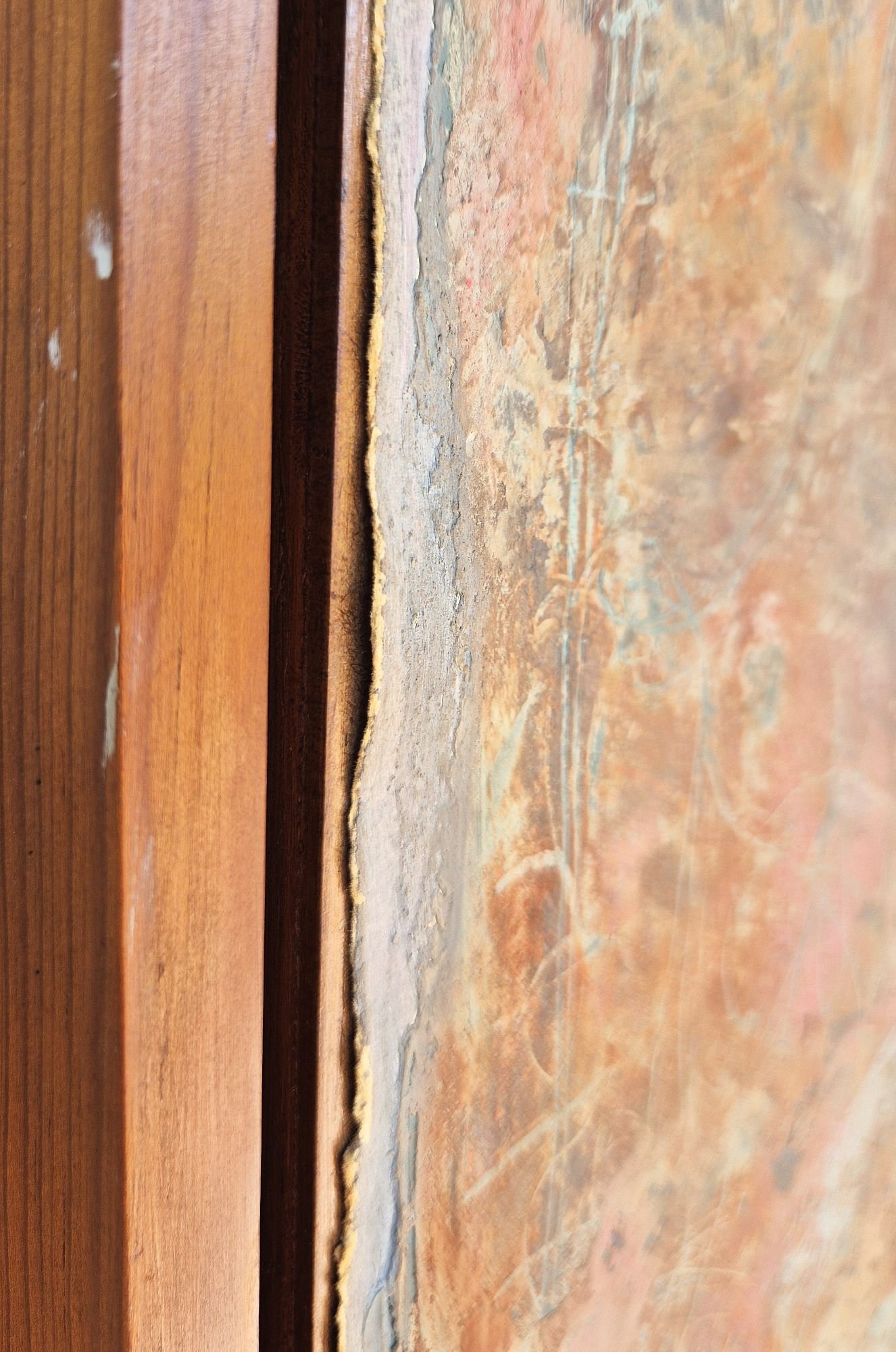
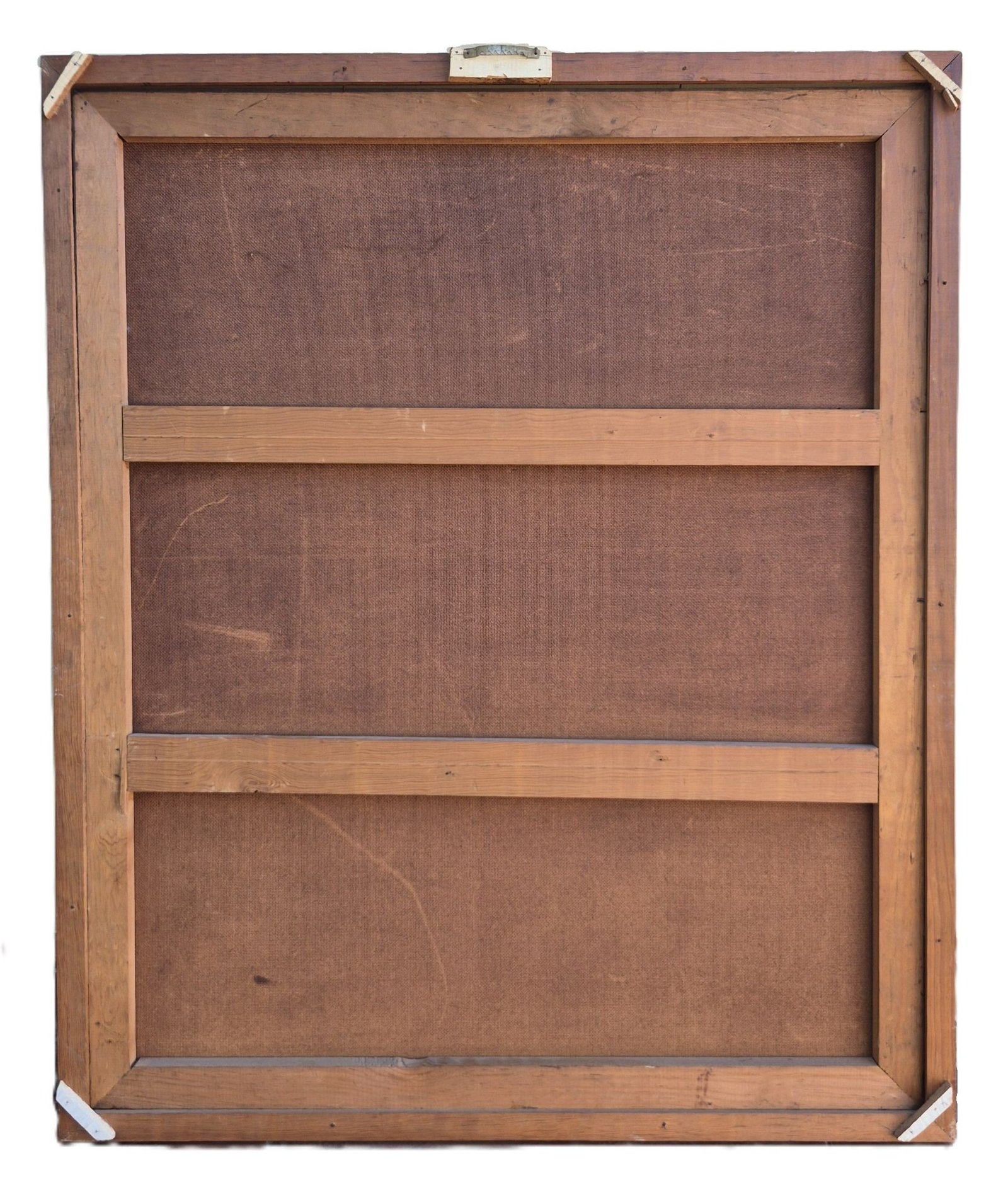
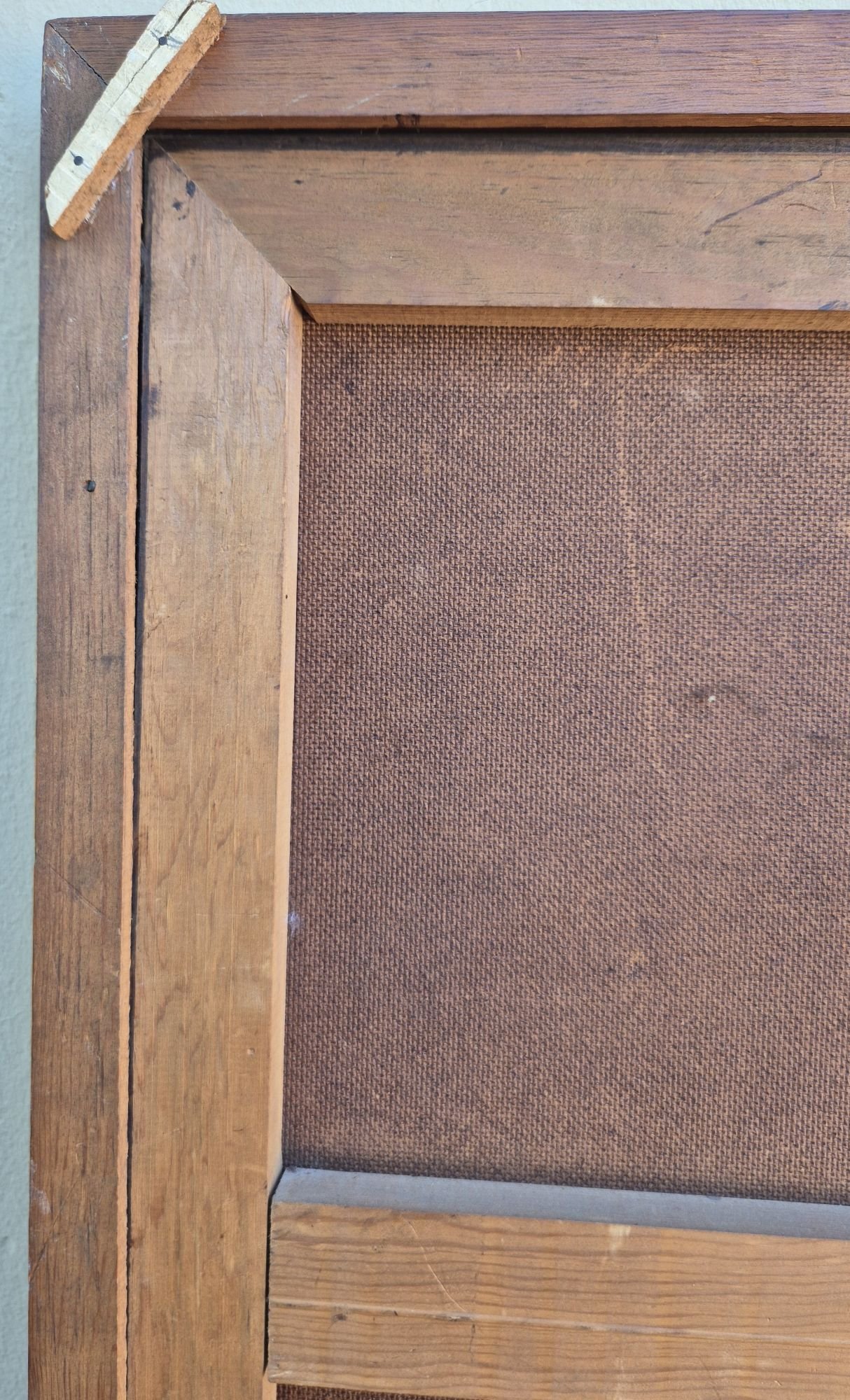
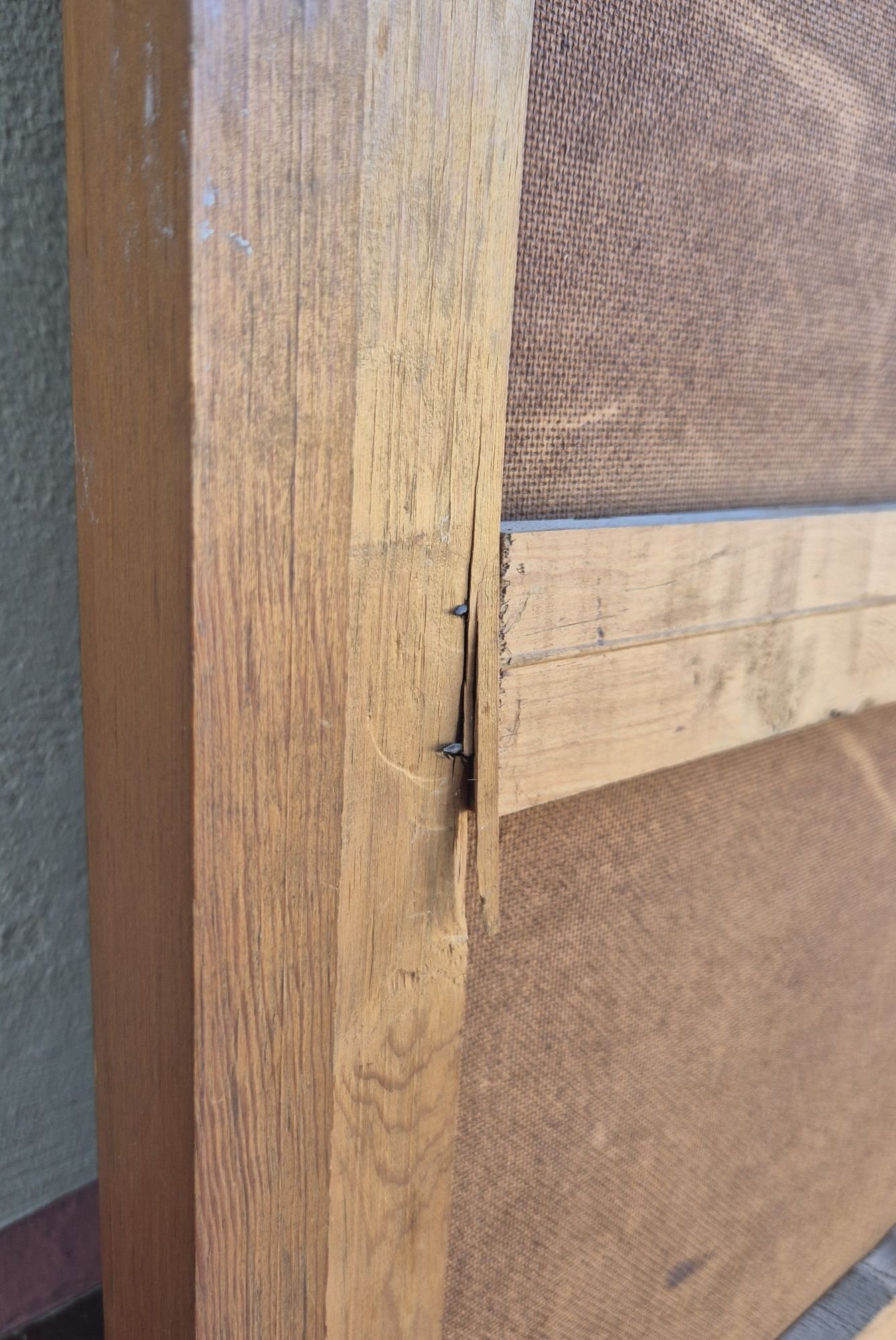
The painting is presented in excellent condition and is ready to hang as is. The pictorial surface is stable, with its intentional textures and crisp, legible network of sgraffito; minor wear is limited to the extreme edges where the canvas meets the frame. The original frame shows some imperfections, and on the reverse, one joint in the rear stretcher has a small chip, invisible from the front and in no way affecting the presentation or structural integrity of the work. We like to think of these marks as four decades of quiet life around a work of art, leaving behind a gentle patina that distinguishes an authentic 1981 original from anything made recently.
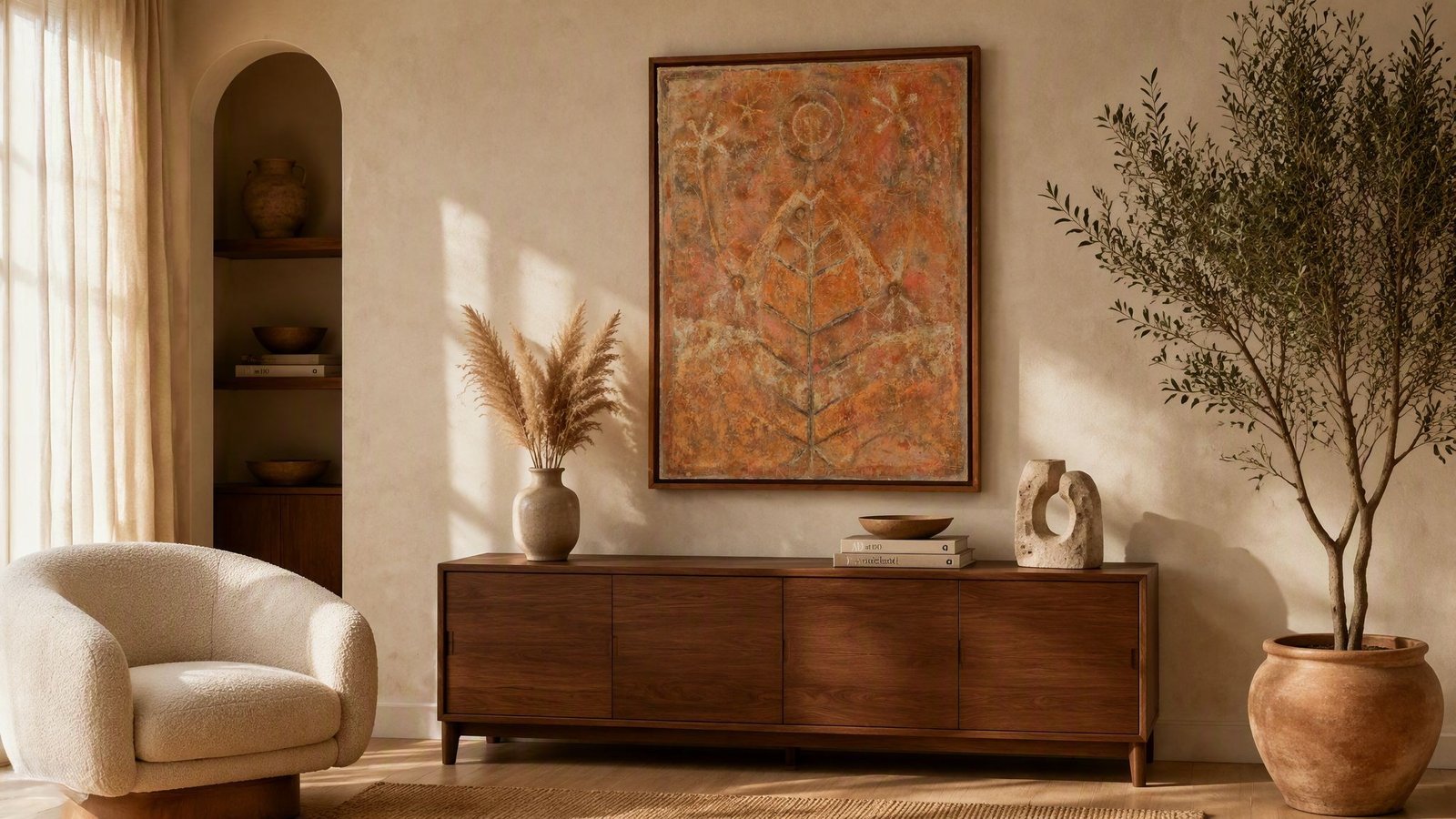
Early-period canvases by Ordoñez appear on the market far less frequently than her later still lifes, and works from the pivotal year of her return from Barcelona in 1981 are genuinely scarce. For the collector of Mexican modernism, or for anyone who wants a wall to radiate warmth, this is the kind of painting around which a room is built.
DETAILS
• Artist: Sylvia Ordoñez (Mexican, b. 1956)
• Title: Untitled
• Date: 1981
• Medium: Mixed media (oil/encaustic) on canvas adhered to Masonite board
• Signature: Signed and dated lower left, “Sylvia Ordoñez 1981”
• Dimensions: 92 × 75.5 cm (96.5 × 80 cm framed)
• Frame: Original wooden frame; ready to hang
• Provenance: Private collection
Questions or comments
You can email any questions or comments you may have about this treasure. Fill out the contact form and we will reply to you as soon as possible.
- Size: 36-1/4 x 29-3/4"
- Frame: 38 x 31-3/4 x 1-3/4"
- Date / Period: 1981
- Style: Abstract Art
- Material: Oil and Mixed technique on canvas and masonite
- Signed: Yes


