

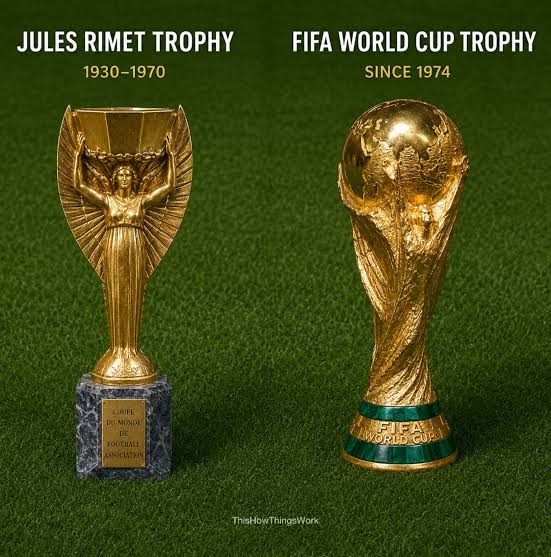
Every four years the entire world stops to watch a captain lift a golden cup. He raises it, kisses it, holds it like it's the most valuable thing on the planet. And in a way it is. But very few people know that the cup we see today is not the first one, and that the first one has a story so strange that Hollywood wouldn't dare make it up.
It was called the Jules Rimet Trophy. And today, almost certainly, it no longer exists.
The Goddess Who Started It All
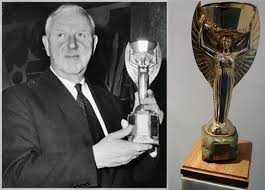
The original World Cup trophy, awarded from 1930 to 1970, looked nothing like the one we know today. It was a gold-plated silver figure, created by French sculptor Abel Lafleur, depicting Nike, the Greek goddess of victory, holding a cup above her head. It had a lapis lazuli base and stood just 35 centimeters tall.
It was originally called simply "Victory." It received the name Jules Rimet in 1946, in honor of the FIFA president who pushed for the creation of the tournament.
The rule was straightforward: the champion kept the trophy for four years, until the next World Cup, when they had to return it so the new winner could take it home. But there was a special clause: if any country managed to win the World Cup three times, they would keep the trophy forever. For four decades, that same silver cup traveled the world, passing through the hands of Uruguay, Italy and Germany, without any of them meeting the condition. Until Brazil came along, the first country to win three times, and the first to trigger that rule. And that is exactly where the strangest chapter of this story begins.
A Dog Named Pickles Saves the World Cup
In 1966, months before England was set to host the World Cup, someone walked into an exhibition in London and stole the Jules Rimet Trophy without anyone noticing. A ransom was demanded. The police set up an undercover operation. And still, the trophy was nowhere to be found.
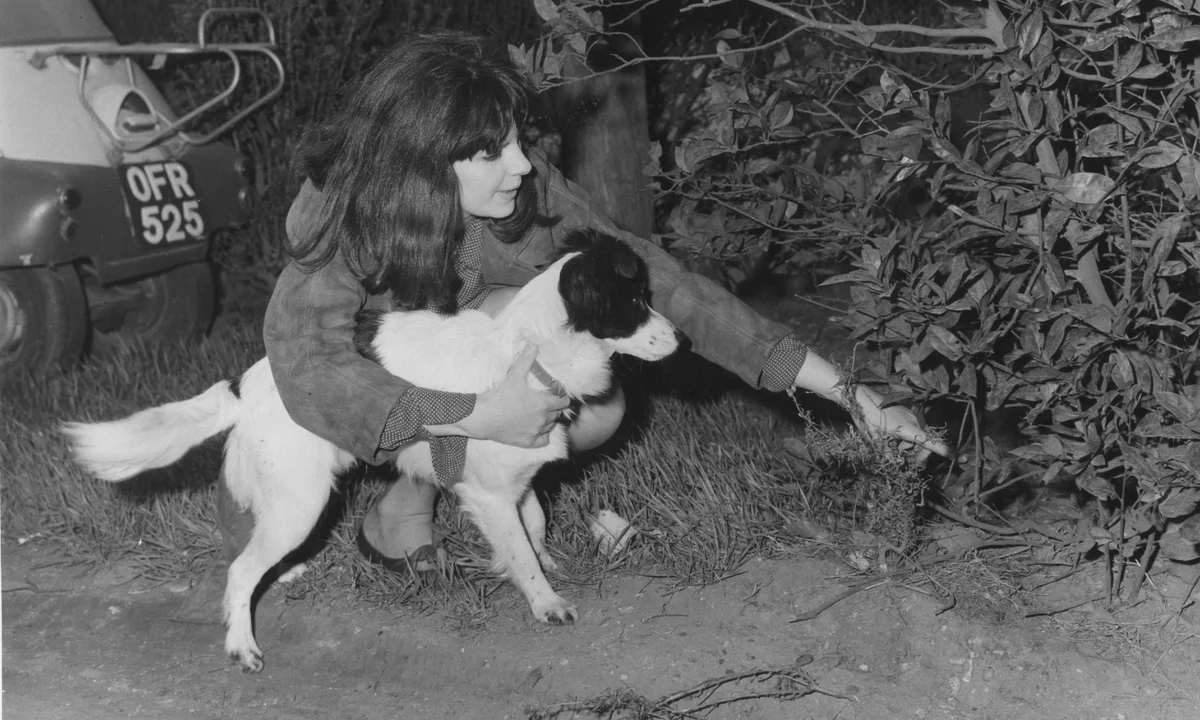
A week later, a man named David Corbett went for a walk with his dog in south London. His dog, a mixed-breed collie named Pickles, started sniffing around some bushes and pulled out a package wrapped in newspaper. Inside was the complete World Cup trophy.
Pickles became an instant national hero. He appeared on television programs, received medals, and even starred in a film. When he died the following year (chasing a cat, as any good dog would), he was buried with a plaque that still reads: "Pickles, finder of the World Cup 1966.".
What almost nobody knows is that after this scare, someone made a quiet decision that would change everything: they had a secret replica made of the trophy, just in case it happened again.
Nobody told the English players. When they lifted the cup after winning the World Cup in 1966, they were holding the copy. The original was already locked away.
The Theft That Was Never Solved
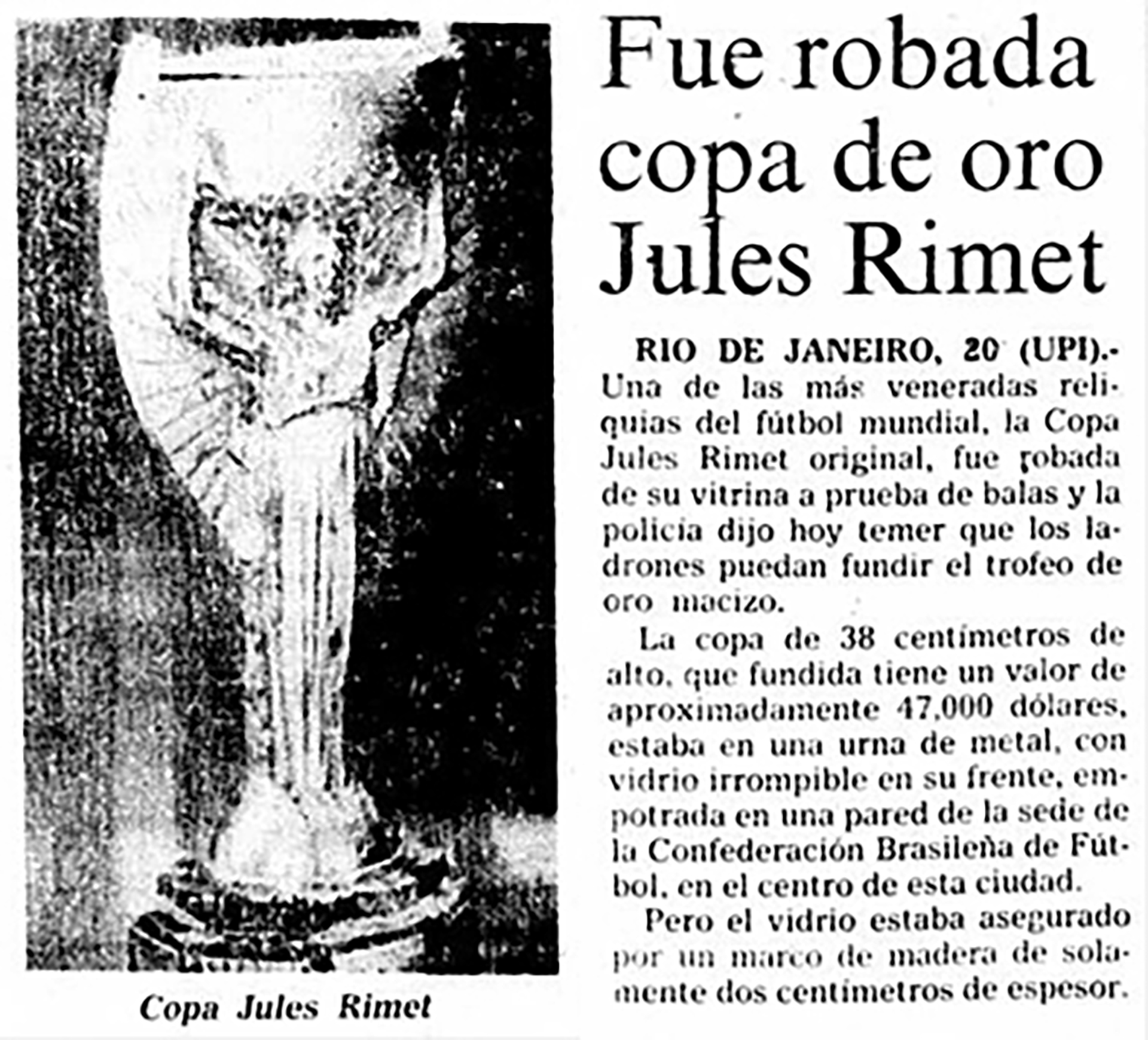
In 1970, Brazil won their third World Cup and, under the original rule, kept the Jules Rimet Trophy permanently. It was installed at the headquarters of the Brazilian football federation in Rio de Janeiro, where it was proudly displayed for 13 years. Until the early hours of December 20, 1983.
Two men entered the building, overpowered the security guard, and walked out with the trophy along with two other cups. The nicknames of those involved sound like they came straight from a gangster film: "Chico Barbudo," "Luiz Bigode," and the mastermind behind it all, a football agent known as "Sérgio Peralta."
Police caught the people responsible. But the trophy, never.
The most widely accepted theory is that it was melted down and sold as gold. An Argentine dealer was accused of smelting it into gold bars, though he denied it, and an analysis of his foundry found no traces that matched the trophy's materials. To make things more confusing, the trophy was not even solid gold: it was gold-plated silver, which makes the gold bar theory hold up less than it seems at first glance.
So the question remains open. Was it melted? Is it still hidden in some basement? Did it end up as jewelry, broken into small unrecognizable pieces?
As one investigator once put it, finding this trophy today would be like finding an Egyptian mummy: you cannot put a price on it because it is family treasure..
The Replica That Survived
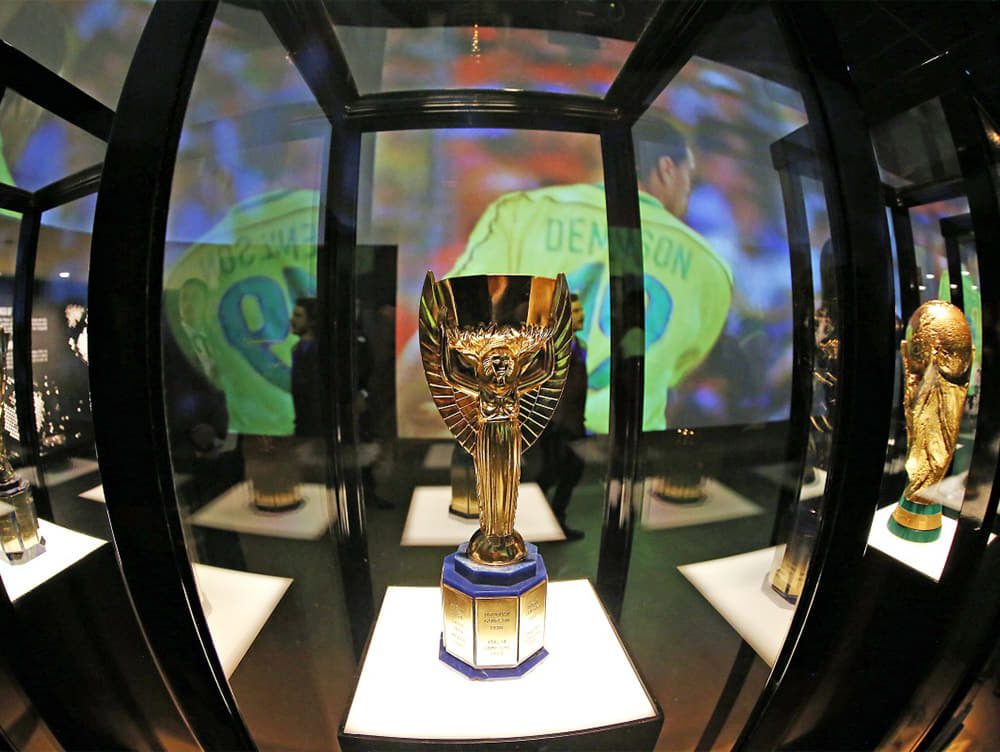
Remember the secret replica made after the 1966 theft? That copy, the one the English players lifted without knowing it, ended up at the National Football Museum in Manchester. For decades, nobody was completely sure whether what they had was the replica or, by some twist of fate, the original.
In 2016, scientists from the University of Manchester used X-ray technology to solve the mystery once and for all. The result confirmed it was the replica.
So today, if you visit that museum, you can stand in front of a copy of a trophy whose original was probably destroyed to sell the metal. A replica of something that no longer exists became, by accident, the real thing.
Do you love stories about objects with unexpected pasts? That is exactly what we do at 32 Reales. Visit our shop and discover art and antiques with real history.
