


Description
Two faces, one intimate moment—and an entire world contained in the space between them.
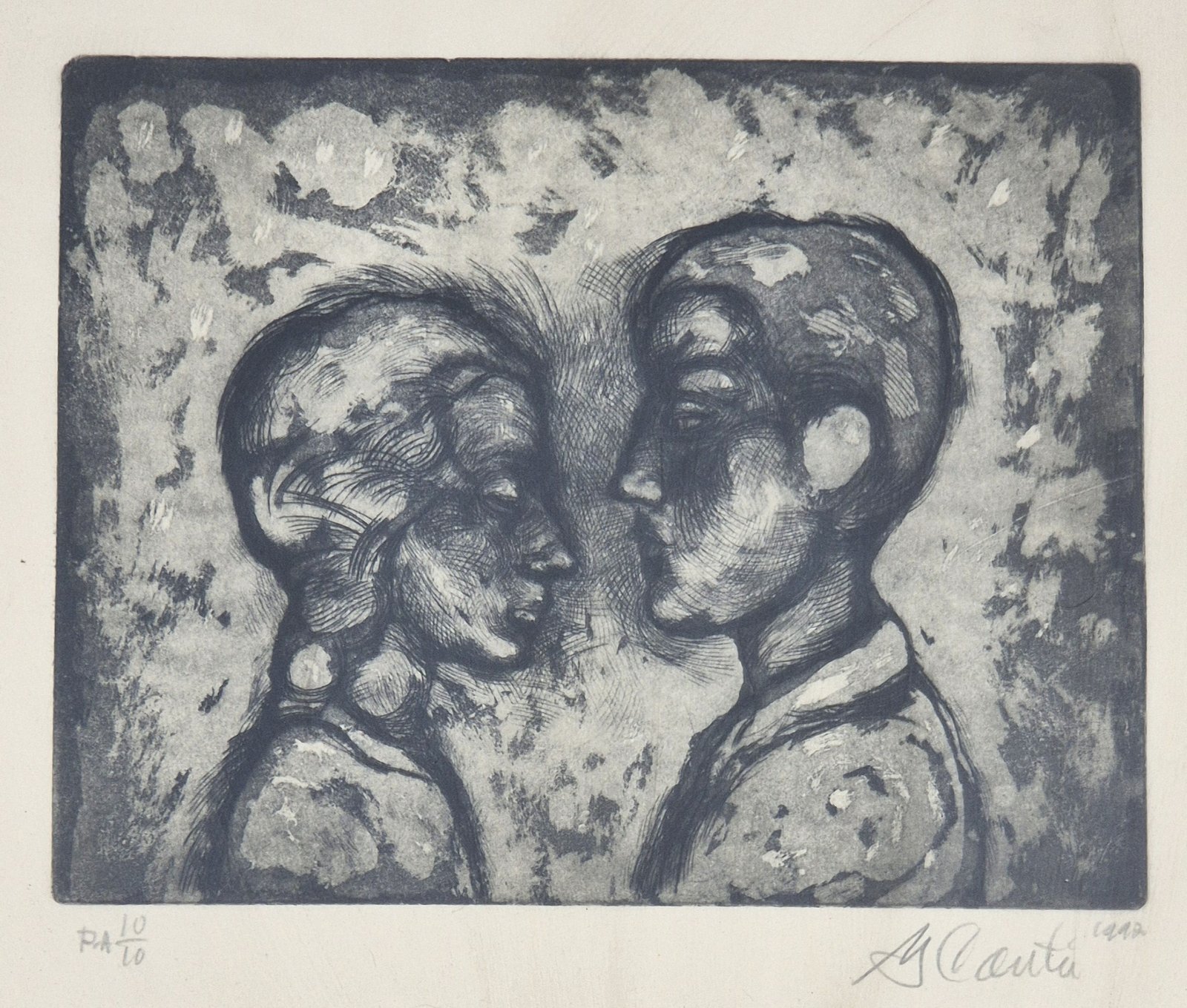
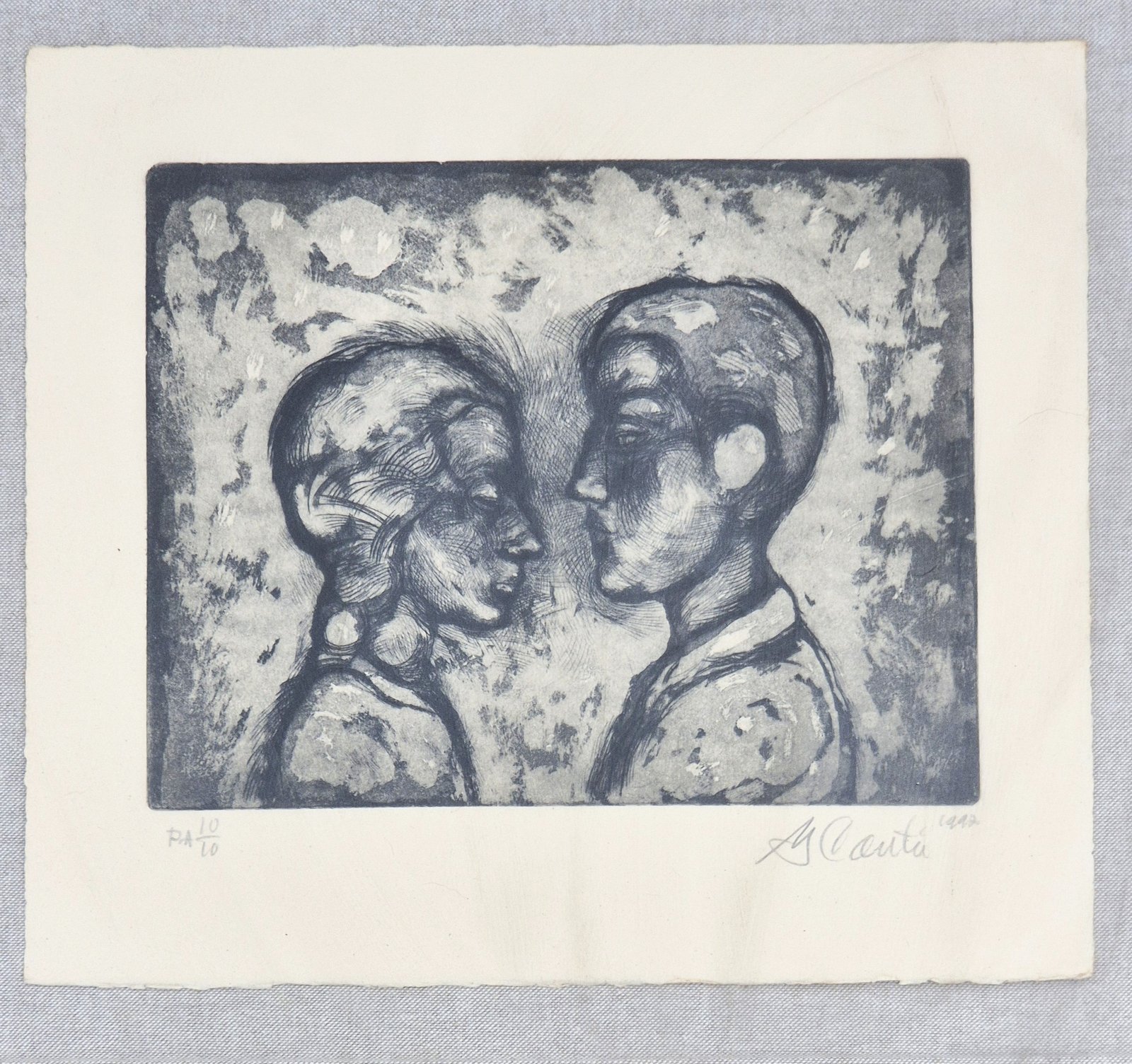
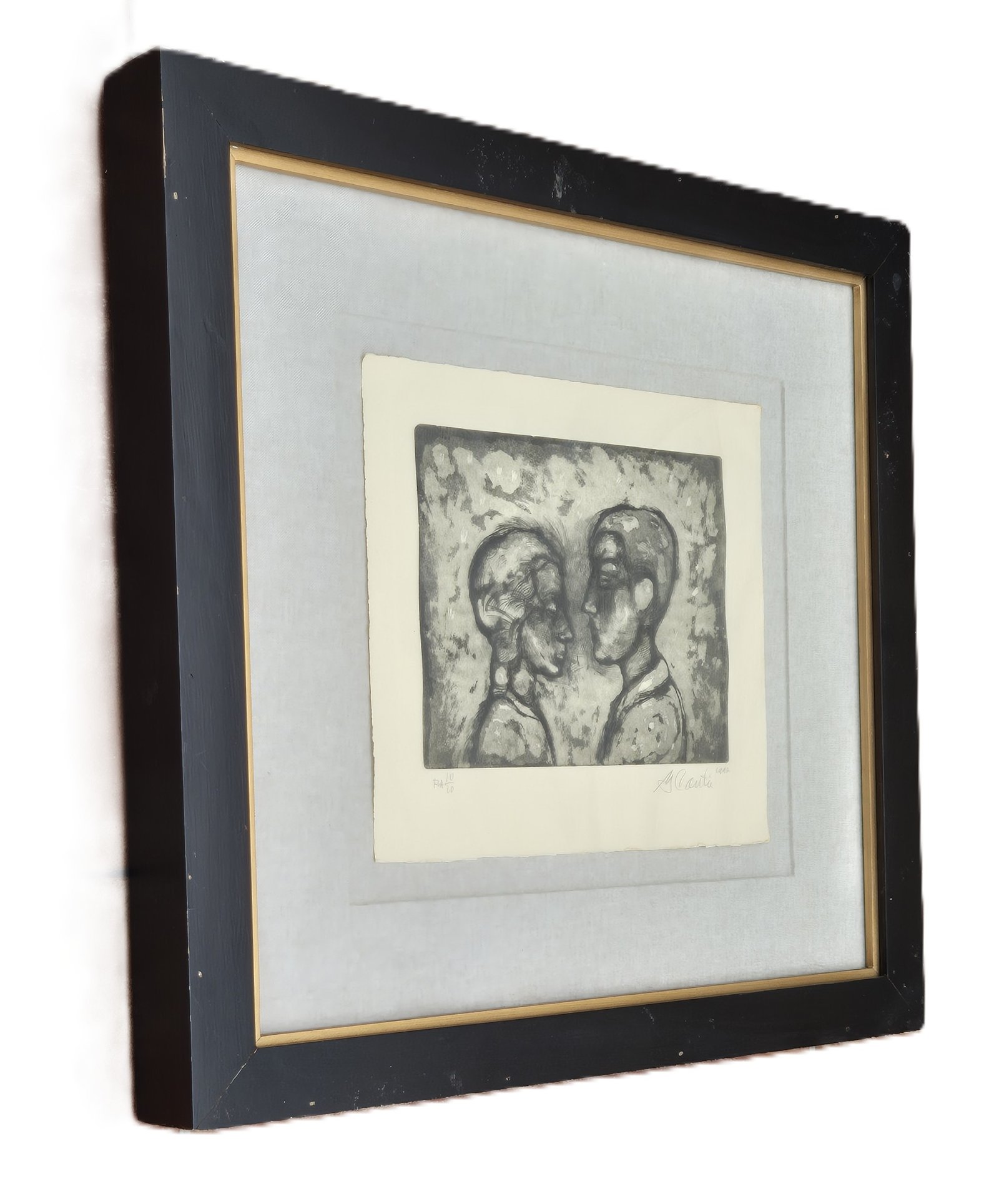
This beautifully intimate engraving by renowned Mexican artist Gerardo Cantú (1934–2021) brings two human figures together in an extraordinarily expressive encounter. Their faces nearly touch, their eyes and gestures suggesting tenderness, complicity and quiet contemplation. Rather than depicting a conventional portrait, Cantú transforms the couple into an almost universal symbol of human connection.
The image is rendered in a restrained monochromatic palette of charcoal gray, ivory and soft black, allowing the extraordinary quality of the drawing to take center stage. Cantú builds the faces through a dense network of fine engraved lines, crosshatching and tonal passages, creating an almost sculptural sense of volume. Around the figures, loosely worked passages of texture create an atmospheric background that seems to dissolve into the paper itself. The result is simultaneously intimate and dramatic: the two figures appear suspended in a private moment, removed from the outside world.
The composition can be read simply as a portrait of a couple, but Cantú's recurring fascination with love, the human figure and sensuality suggests a deeper interpretation. The physical closeness of the two faces may represent affection, desire, companionship or even the fragile psychological space shared by two people in a relationship. Cantú frequently returned to women, couples, love and eroticism throughout his career, treating them not merely as subjects of sensuality but as vehicles for exploring human emotion. His own comments about his work emphasized his fascination with people, women and the sensual qualities of life.
There is also something particularly appealing about the ambiguity of the image. Are these lovers? Companions? Two aspects of the same relationship? Cantú does not give us an answer. Instead, the viewer is invited to complete the story.
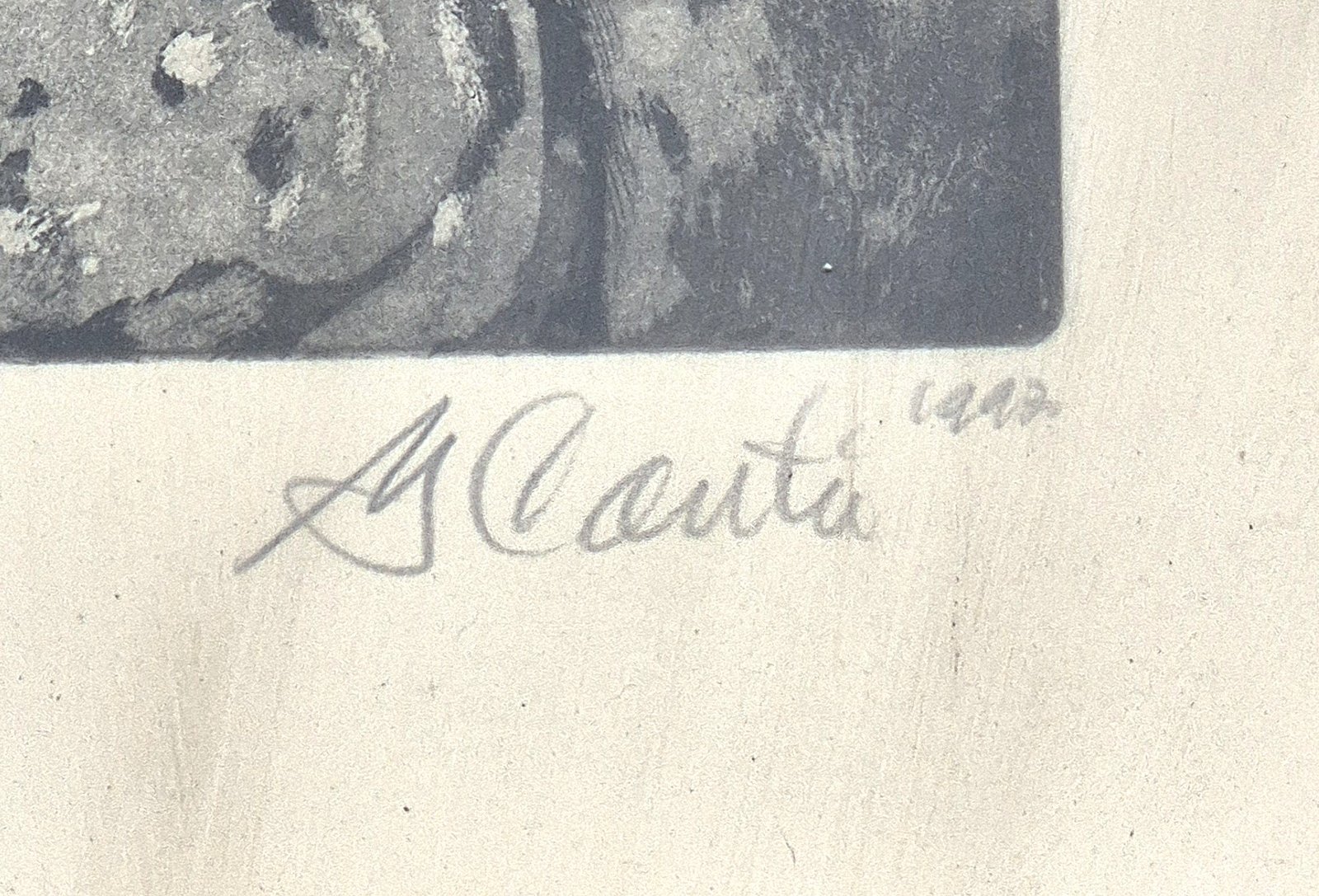
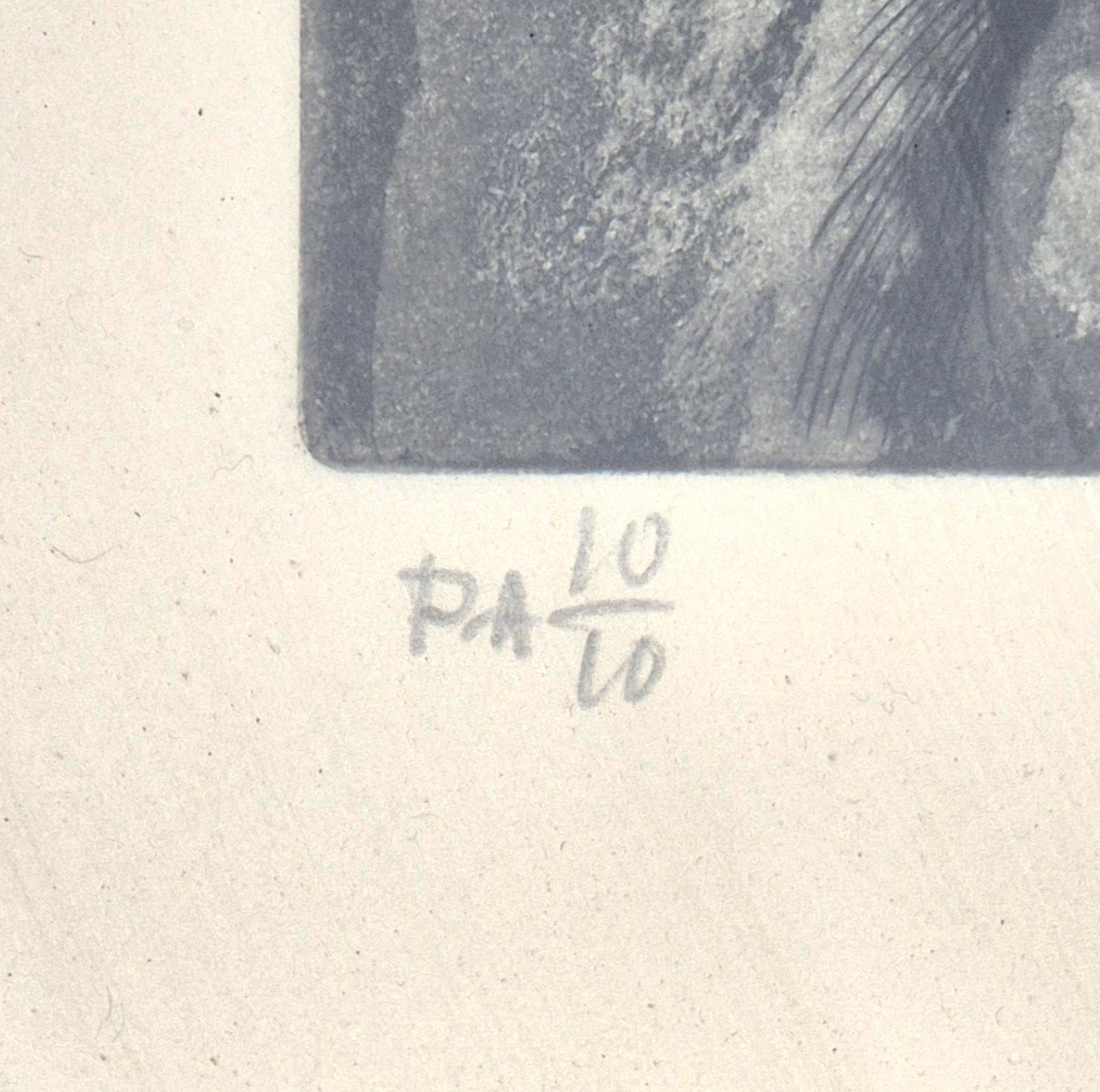
Executed in 1997, this is an original graphic work rather than a modern reproduction. The print is signed by Gerardo Cantú in pencil and dated 1997, and is identified as P/A 10/10 (Artist's Proof). The unusually small artist's-proof group makes this an appealing piece for collectors of Mexican graphic art, particularly those interested in Cantú's mature period.
The technique appears to be burin and aquatint, a combination particularly suited to Cantú's graphic language. The burin provides the remarkably precise linear drawing visible in the faces and hair, while the aquatint-like tonal passages create the smoky, atmospheric areas surrounding the figures. Cantú was an important and prolific printmaker who worked in lithography, metal engraving and experimental graphic techniques throughout his career. The Museo Arocena notes that he moved with exceptional ease between lithography, etching and other graphic processes, while the INBAL has described him as a pioneer of printmaking in Mexico.
Gerardo Cantú was born in Nueva Rosita, Coahuila, in 1934, but became one of the defining artistic figures of Nuevo León. He studied at the Taller de Artes Plásticas of the Universidad de Nuevo León and later at the prestigious Escuela Nacional de Pintura, Escultura y Grabado La Esmeralda in Mexico City. He subsequently studied in Prague and Paris. During his career he exhibited more than 300 times in Mexico and abroad, including three individual exhibitions at the Palacio de Bellas Artes, as well as exhibitions in the Czech Republic, France, Cuba, Argentina, Paraguay, Brazil, Spain, India and the United States.
His artistic language belongs firmly to the figurative tradition of Mexican modernism. Cantú was influenced by the great Mexican muralists, particularly Diego Rivera, while developing a highly personal vocabulary characterized by expressive drawing, sensuality, humor and an enduring fascination with the human figure. INBAL has described him as one of the last exponents of the Escuela Mexicana de Pintura, while the Museo Arocena emphasizes the complexity and imaginative quality of his figurative work.
Cantú himself considered printmaking an important bridge between the artist and the public. His graphic work ranges from early colorful prints to highly atmospheric engravings, and museums have repeatedly highlighted the importance of this aspect of his career. A major retrospective at the Museo Mural Diego Rivera in 2016–2017 devoted an entire section to his printmaking, alongside his painting and drawing.
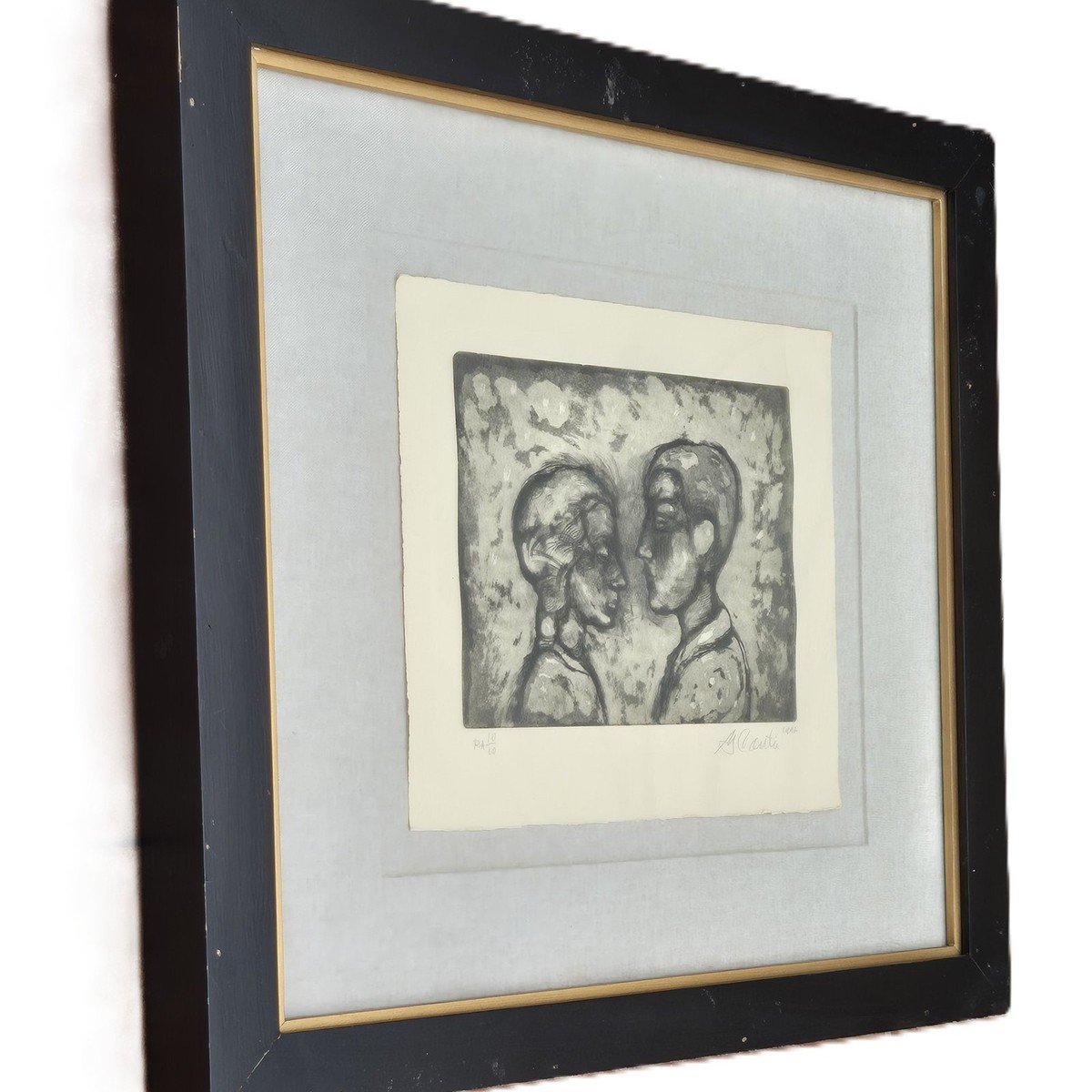
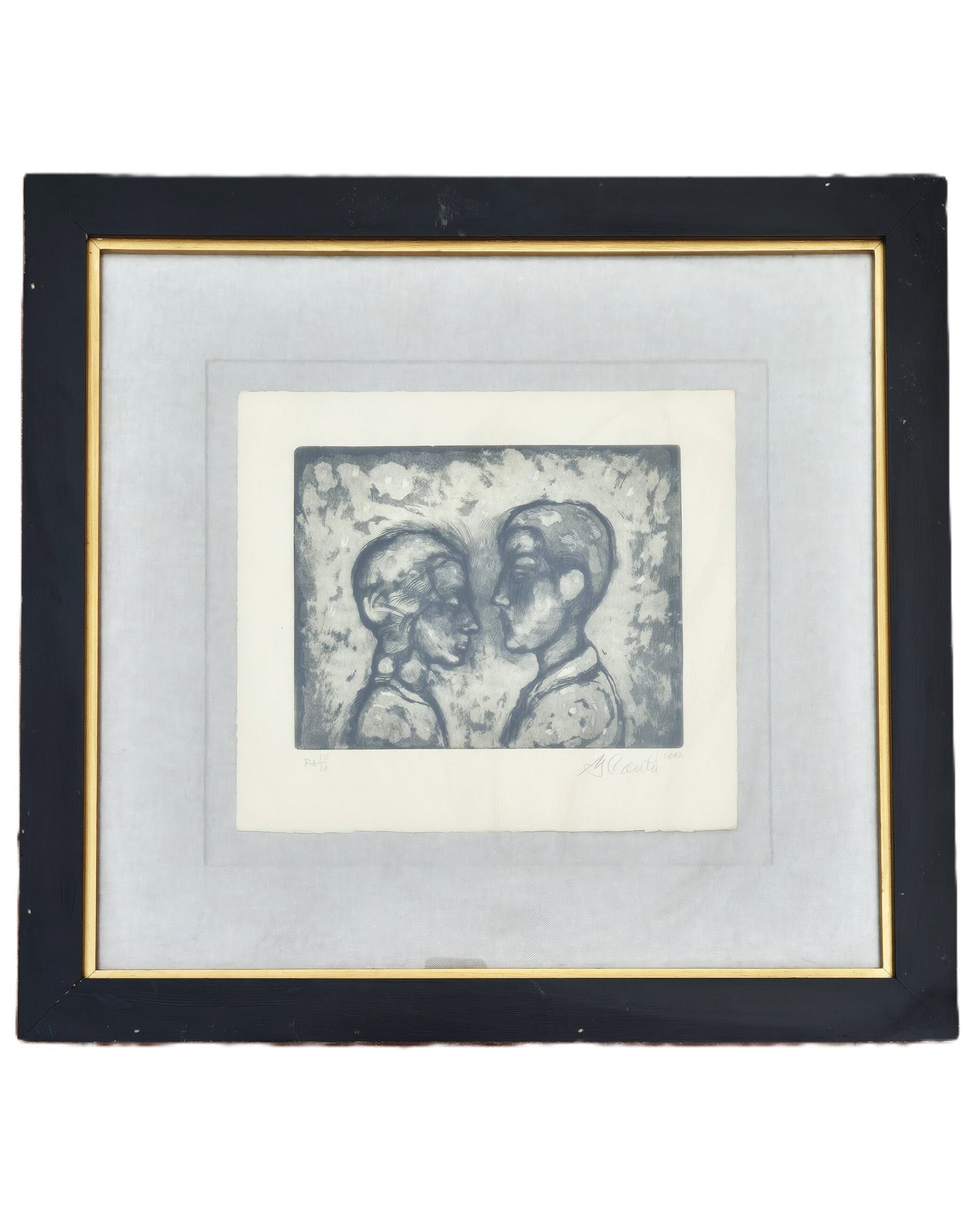
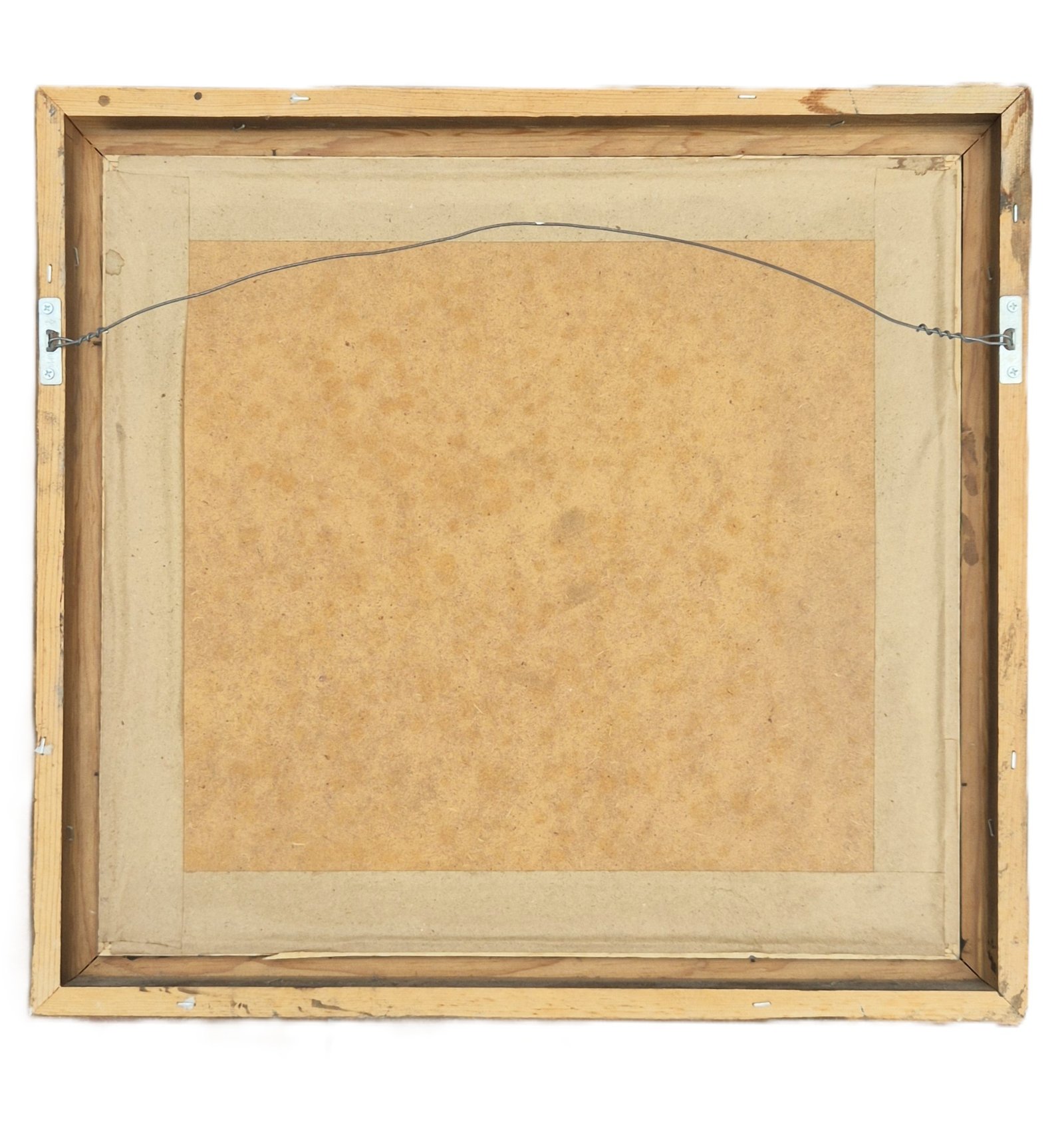
The work is presented in an attractive period frame dating from around the time the print was made. The frame has some minor scrapes and signs of use consistent with its age, but remains in very good overall condition and is entirely suitable for display as-is. Its substantial proportions give the small engraving a much stronger presence on the wall and make it particularly effective in a study, library, office, bedroom or intimate sitting area.
For collectors of Mexican art, this is an especially attractive way to acquire an original work by an important Mexican printmaker without the scale or investment normally associated with his paintings and murals. The intimate subject, restrained palette and handsome period presentation also make it unusually easy to incorporate into a contemporary interior.
It is the sort of work that rewards repeated looking: at first you see two faces; then the texture, expressions and engraved marks begin to reveal a much more complicated conversation between them.
Questions or comments
You can email any questions or comments you may have about this treasure. Fill out the contact form and we will reply to you as soon as possible.
- Size: 7-3/4 x 9-3/4"
- Support: 11 x 12-1/2"
- Frame: 23 x 21-3/4 x 2-1/4"
- Date / Period: 1997
- Style: Contemporary
- Material: Aquatint on paper
- Signed: Yes


