


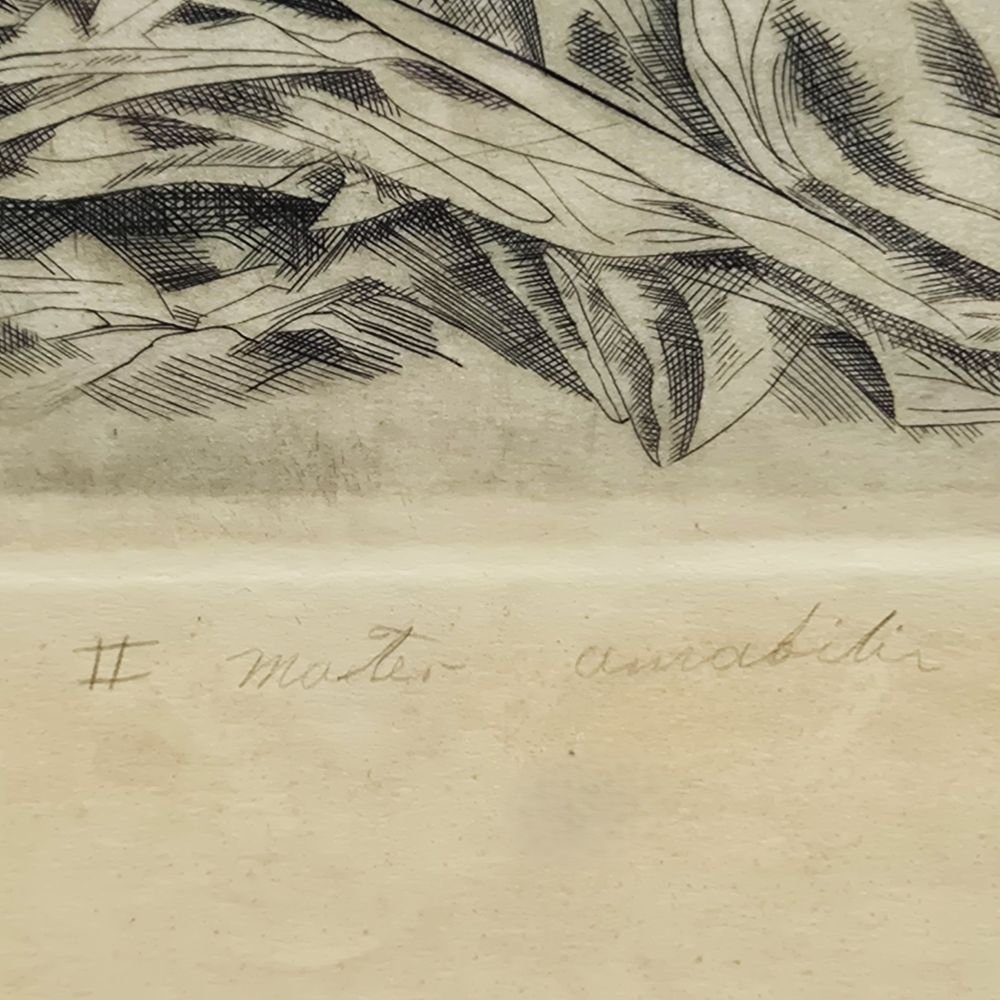
II Mater Amabilis
Federico Cantú
Engraving on paper
19 x 13"
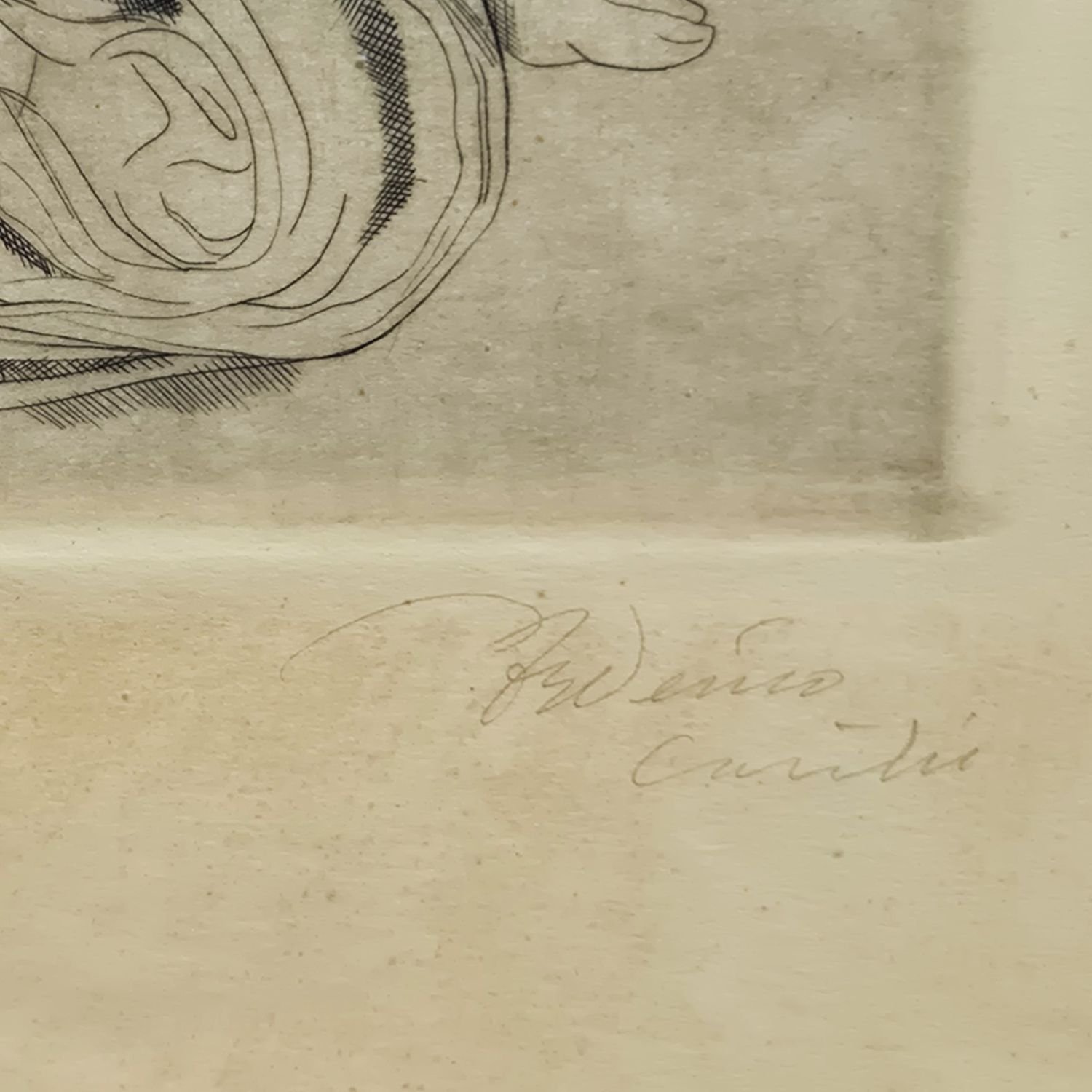
Signed
c1950
$8,300.00 plus shipping
Available
Description
An image of extraordinary delicacy in which Federico Cantú turns the motherhood of the Virgin into a scene of intimacy, tenderness, and classical beauty.
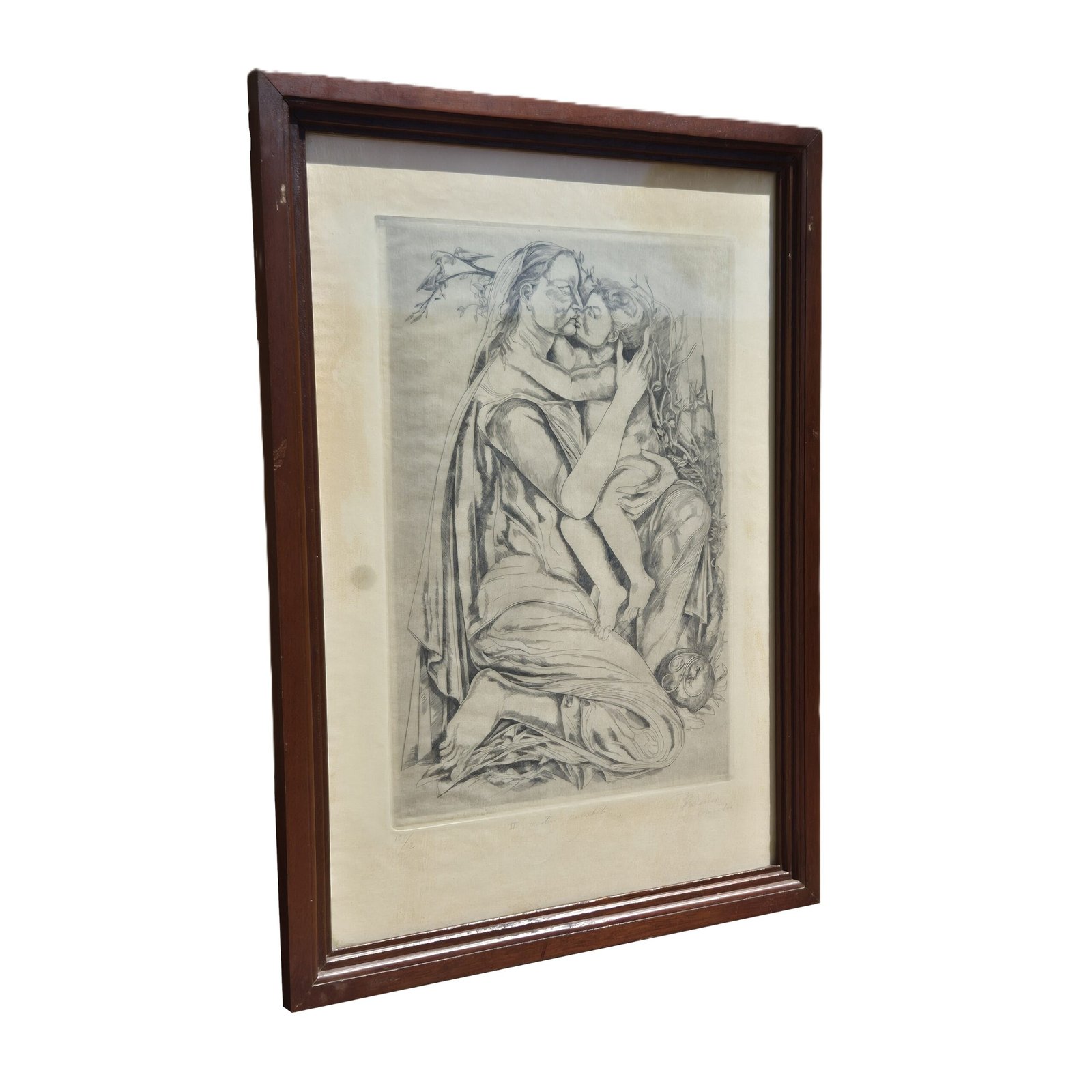
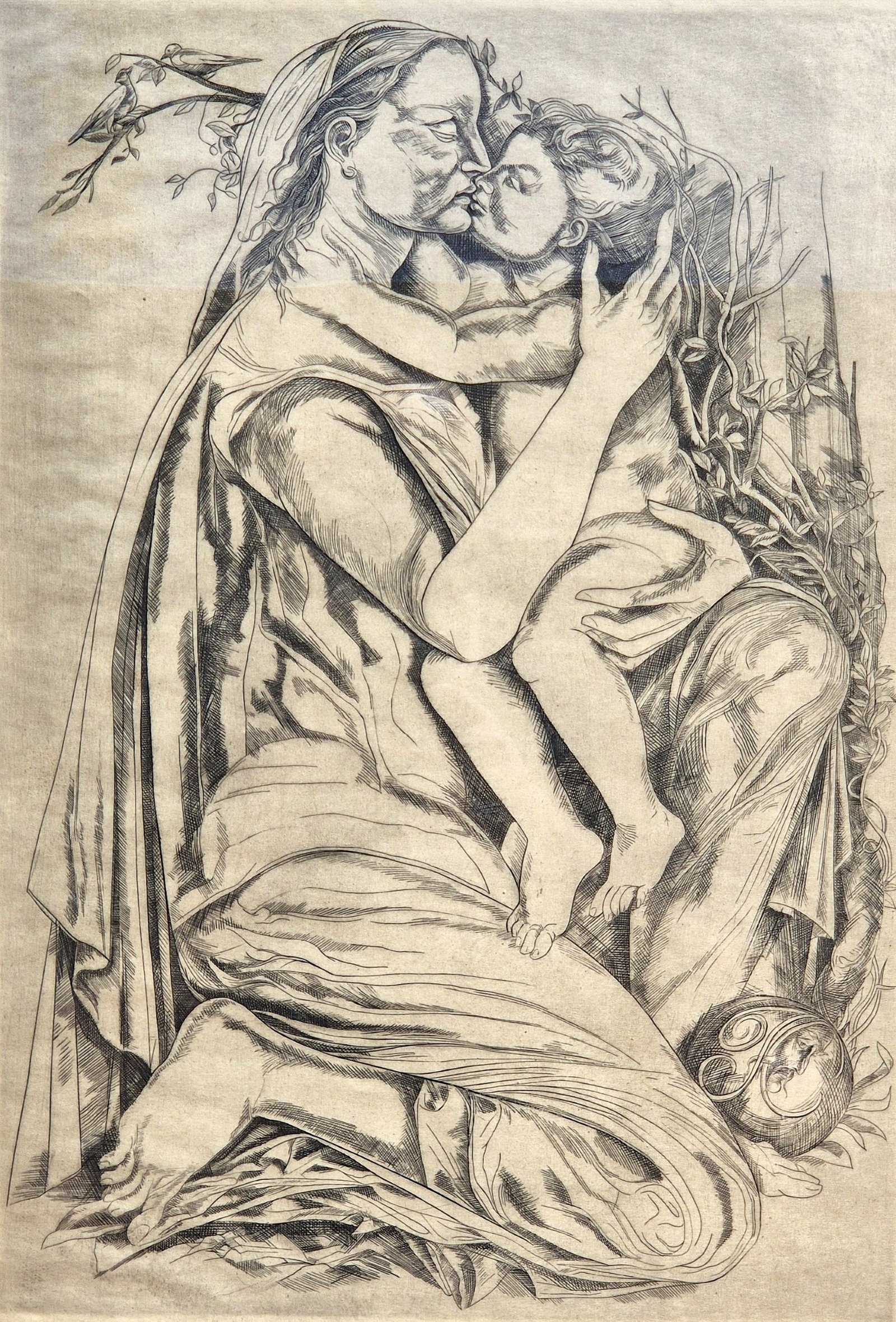
"II Mater Amabilis" is a magnificent example of Federico Cantú's deep relationship with printmaking and Christian iconography. The print depicts the Virgin Mary holding the Child Jesus in her arms, both enveloped in a composition of great ornamental richness featuring fabrics, branches, leaves, and other symbolic elements. The closeness between mother and child conveys a sense of affection and protection that lies at the heart of the work.
El título, “Mater Amabilis”, pertenece a las tradicionales advocaciones marianas y puede traducirse como “Madre amable”, “Madre digna de amor” o “Madre amada”. La expresión forma parte de la tradición litúrgica de las Letanías de Loreto y se refiere a María como una figura maternal que inspira amor y devoción.
The choice of the child's nude body also responds to a very ancient tradition in Christian art, in which Christ's humanity is made visible through his representation as a vulnerable child held by his mother. Cantú combines that religious tradition with a sensibility deeply rooted in the drawing of the human figure.
The composition possesses an extraordinary sense of movement. Mary's body forms an enveloping structure around the child, while the folds of the fabrics guide the viewer's gaze toward the central figures. The branches and leaves surrounding the scene create a kind of natural frame within the image itself. At the bottom, an ornate sphere incorporates the elegant monogram "FC" of Federico Cantú, integrated directly into the composition.
A study by the Universidad Autónoma de Nuevo León precisely notes that the monogram, formed by the interwoven initials of his name, was a constant presence throughout the artist's career and that he began using it from his burin engravings onward. The presence of the monogram within the image, rather than being limited to an external signature, is characteristic of how Cantú conceived graphic works as objects carefully designed down to the smallest details. The result is a print where the artist's signature forms part of the visual architecture of the composition itself.
Federico Cantú y el grabado
Federico Cantú Garza (1907-1989) ocupa un lugar importante dentro del arte mexicano del siglo XX. Nacido en Cadereyta de Jiménez, Nuevo León, desarrolló una carrera extraordinariamente amplia como pintor, dibujante, muralista, escultor y grabador. Su obra transitó entre la tradición clásica europea, la Escuela Mexicana de Pintura y una sensibilidad personal profundamente interesada por los temas mitológicos, religiosos, históricos y literarios.
Técnica y características
The piece is an original burin engraving on paper, signed, numbered, and titled in pencil by Federico Cantú. The quality of the lines is particularly evident in the areas of greatest detail. Cantú uses parallel, cross-hatched lines of varying densities to build volume, shadow, and depth. The fabrics seem to acquire weight and movement through hundreds of small line variations, while the bodies present a much cleaner and more luminous surface.
The contrast between the densely worked areas and the light surfaces is one of the print's greatest attractions. This technique demands enormous precision and largely explains the sculptural appearance of the figures.
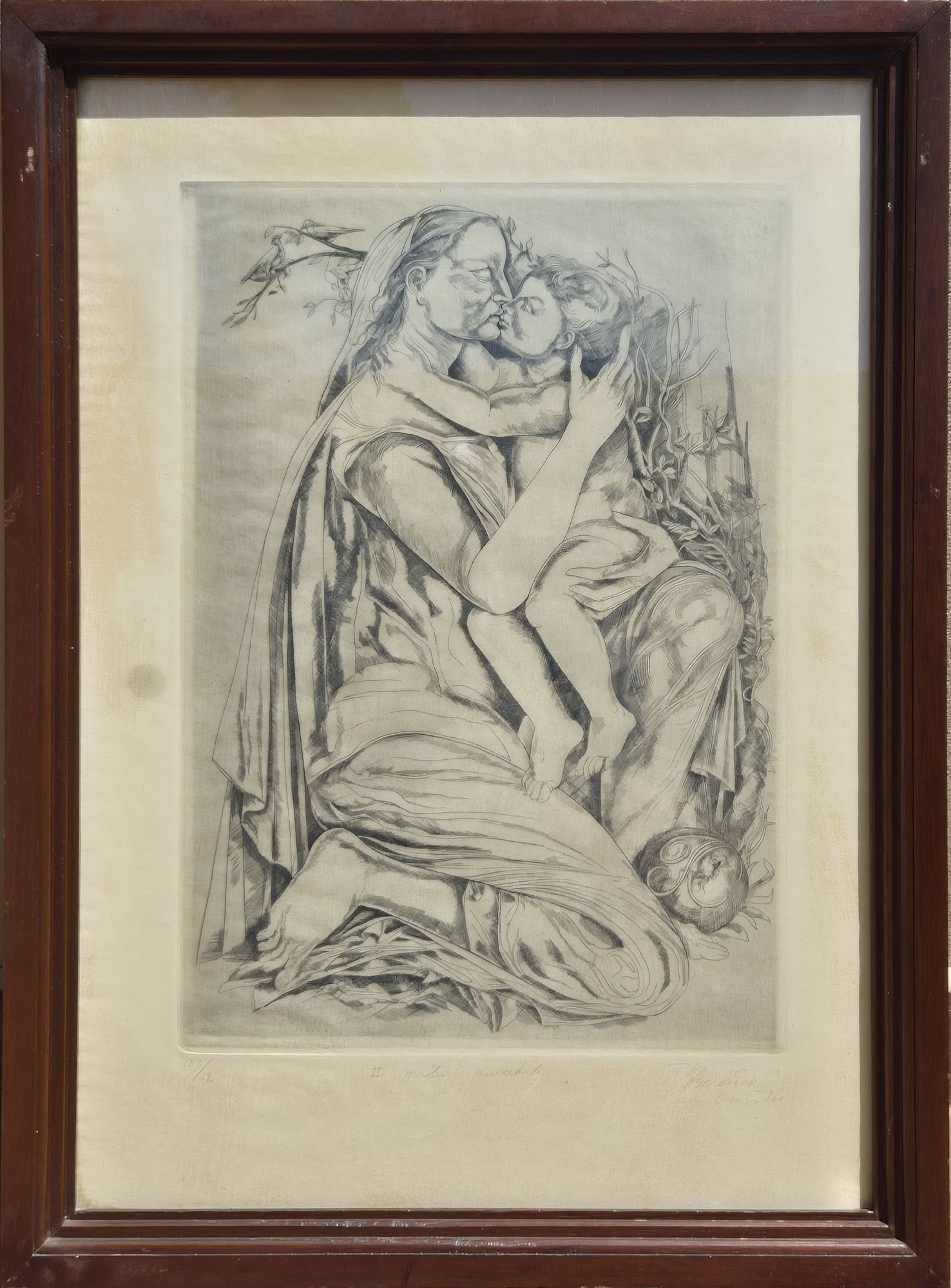
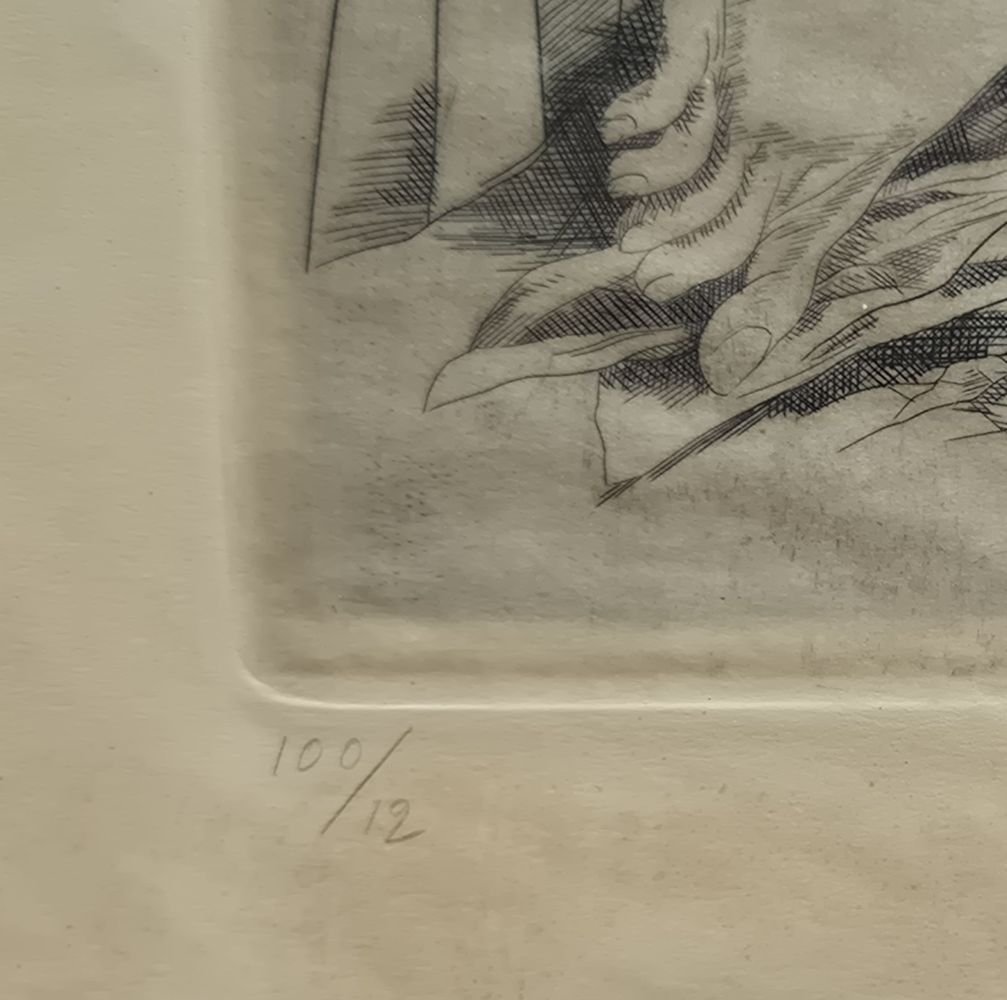
The numbering follows a convention used by Cantú in numerous prints, in which the edition number appears before the individual impression number. Therefore, the 100/12 on this copy is interpreted as an edition of 100 impressions and number 12 within that edition. The combination of handwritten title, signature, numbering, and FC monogram adds an important level of interest for collectors of Federico Cantú's graphic work.
Condition
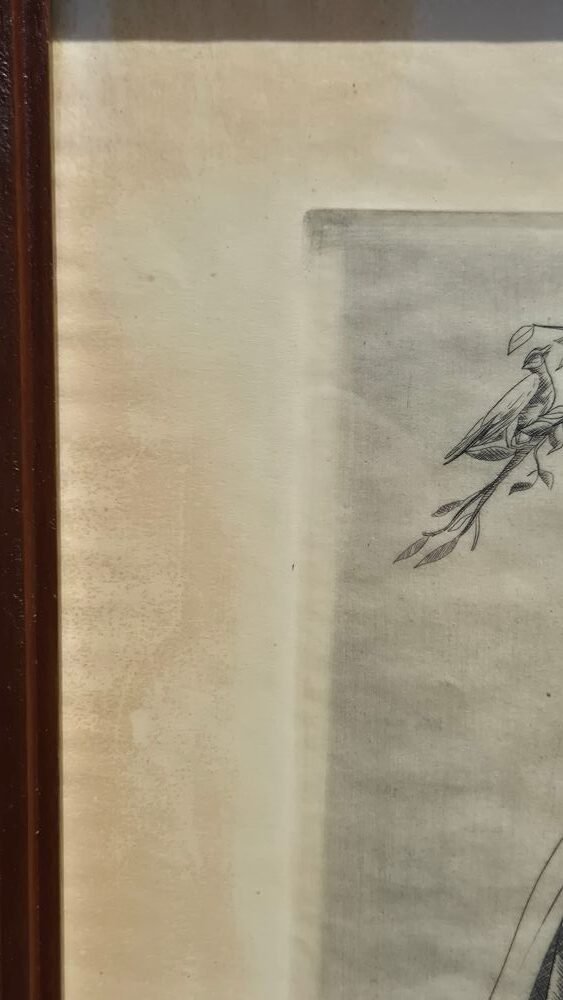
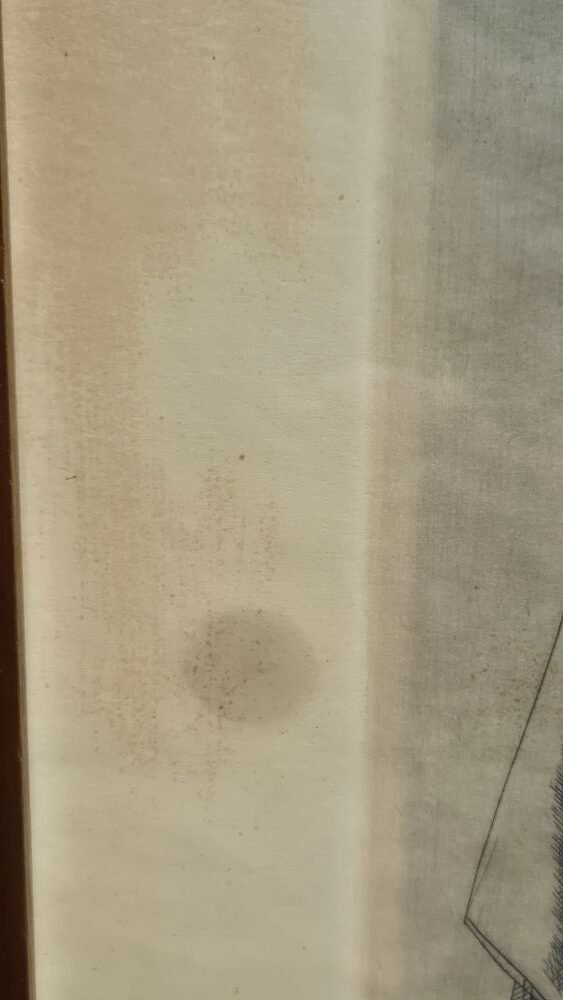
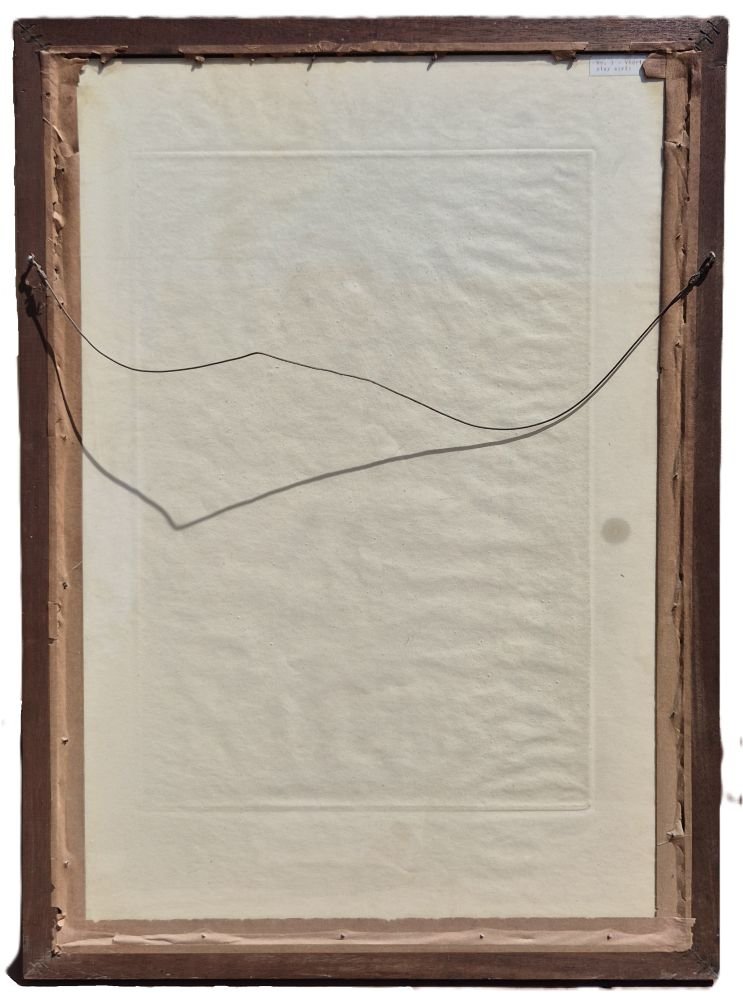
The print shows signs of natural aging consistent with its age and the nature of the paper support. On the margins, general yellowing, foxing stains, discoloration spots, and some tonal variations are observed. Slight undulations and signs from its historical mounting are also visible. The engraved image maintains a clear and attractive reading, with the fundamental lines and details of the composition well preserved. The alterations are more visible in the margins than in the main area of the image.
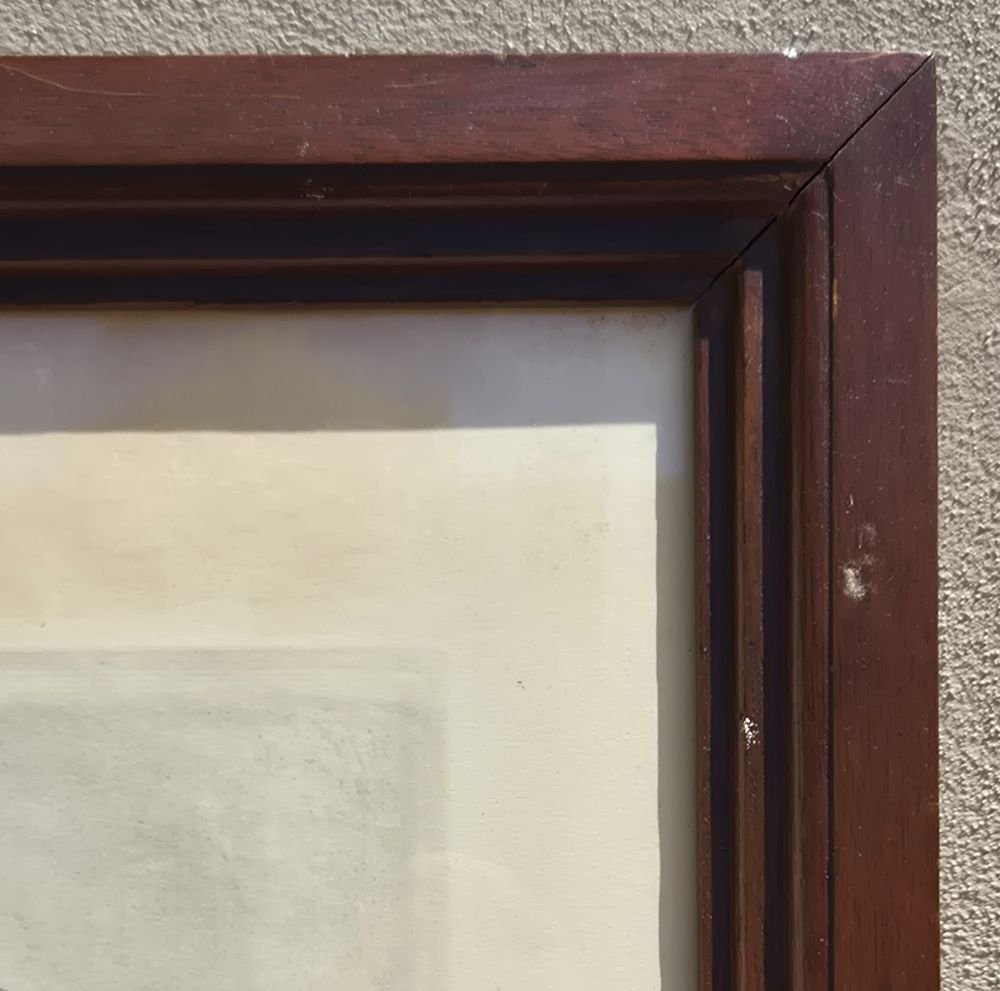
The wooden frame also shows wear, small bumps, abrasions, and occasional losses in the finish. The reverse retains an old mounting system that evidences the piece's history. These traces are part of the materiality of an object that has survived for nearly a century.
Technical Sheet
Artist: Federico Cantú Garza (1907–1989)
Title: "II Mater Amabilis"
Technique: Original burin engraving on paper
Signature: Pencil-signed by Federico Cantú
Title: Inscribed in pencil by the artist
Numbering: 100/12
Numbering interpretation: Edition of 100 copies, impression number 12
Monogram: FC, integrated into the composition
Date: Mid-20th century; probably within the graphic production stage of the 1950s, pending specific documentary confirmation for this second version
Printed image: 48.5 × 33 cm
Paper: 65 × 46 cm
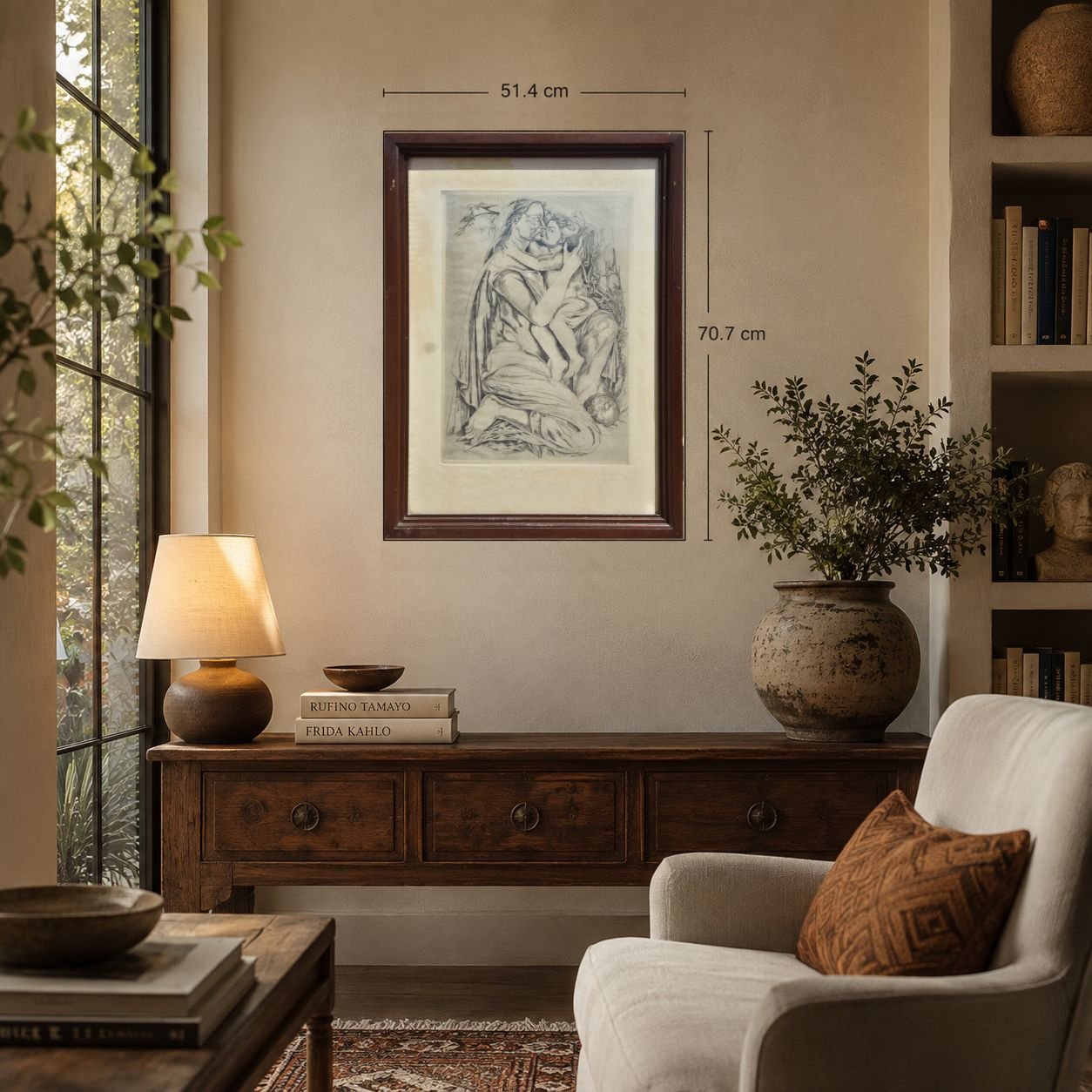
Framed dimensions: 70.7 × 51.4 cm
Support: Paper
Frame: Wood, antique
Orientation: Vertical
Country: Mexico
Period: 20th century
Condition: Good general condition with signs of age, foxing, tonal variations, paper undulations, and wear to the frame
Type: Original graphic work, unique piece within the edition
Questions or comments
You can email any questions or comments you may have about this treasure. Fill out the contact form and we will reply to you as soon as possible.
- Size: 19 x 13"
- Support: 25-1/2 x 18"
- Frame: 27-3/4 x 20-1/4 x 1"
- Date / Period: c1950
- Material: Engraving on paper
- Signed: Yes

