

A masterpiece no one can see is, in a certain sense, a masterpiece that does not exist for the rest of the world. For half a century, a painting by Vincent van Gogh remained out of public view, kept in a private Argentine collection. Now, Châtaigniers en fleurs (Chestnut Trees in Flower), painted in May 1890, is about to take center stage in one of the most spectacular auctions of recent years. Sotheby's expects it to reach around $180 million, a figure that could exceed $200 million with fees. But behind such a financial spectacle lies a far more interesting question: is it fair for one person to buy a masterpiece and keep it for decades, depriving the rest of humanity of seeing it?
A Van Gogh That Spent 50 Years Under Lock and Key
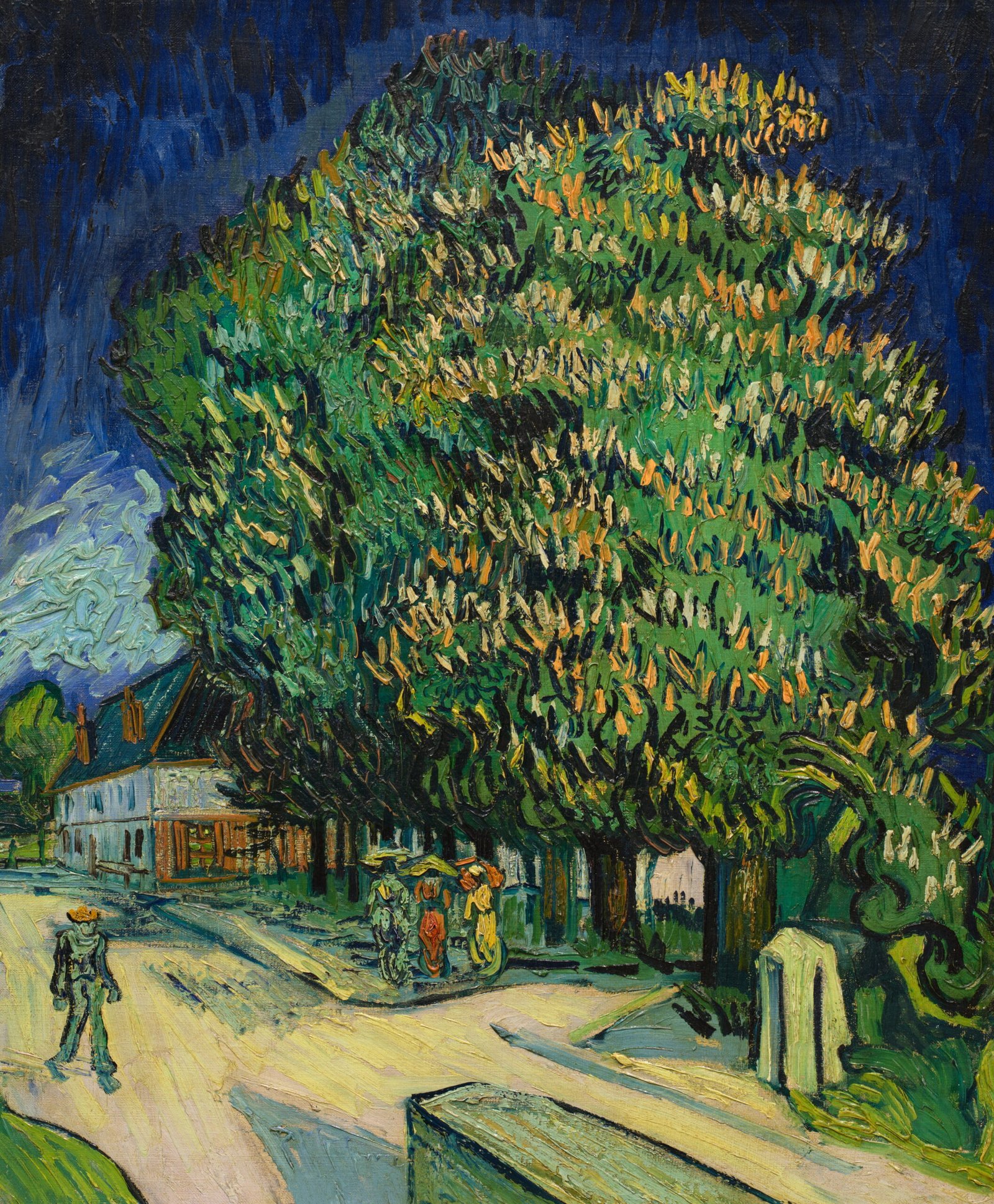
The story of this painting reads like something out of a novel about collectors, fortunes, and lost treasures. Van Gogh painted it in Auvers-sur-Oise, France, during the final weeks of his life. The canvas shows enormous chestnut trees covered in white blossoms, a house beside a road with passers-by, and vigorous brushwork that makes the foliage seem to vibrate, with that emotional intensity so characteristic of his last works.
After the painter's death in July 1890, the work passed first to his brother Theo, then to his sister-in-law Johanna van Gogh-Bonger and her son. In 1909 it reached the collection of the Frenchman Gustave Fayet, one of the great collectors of modern art in the early 20th century. According to a note in his diary, Fayet paid 3,800 francs for it, roughly equivalent to $750 at the time.
Decades later, in 1975, the painting was acquired by the Argentine couple Carlos Pedro Blaquier and Nelly Arrieta de Blaquier. It has remained in the family's hands ever since, practically vanished from public view. It is one of the few paintings from that final period of Van Gogh's that remain in private hands.
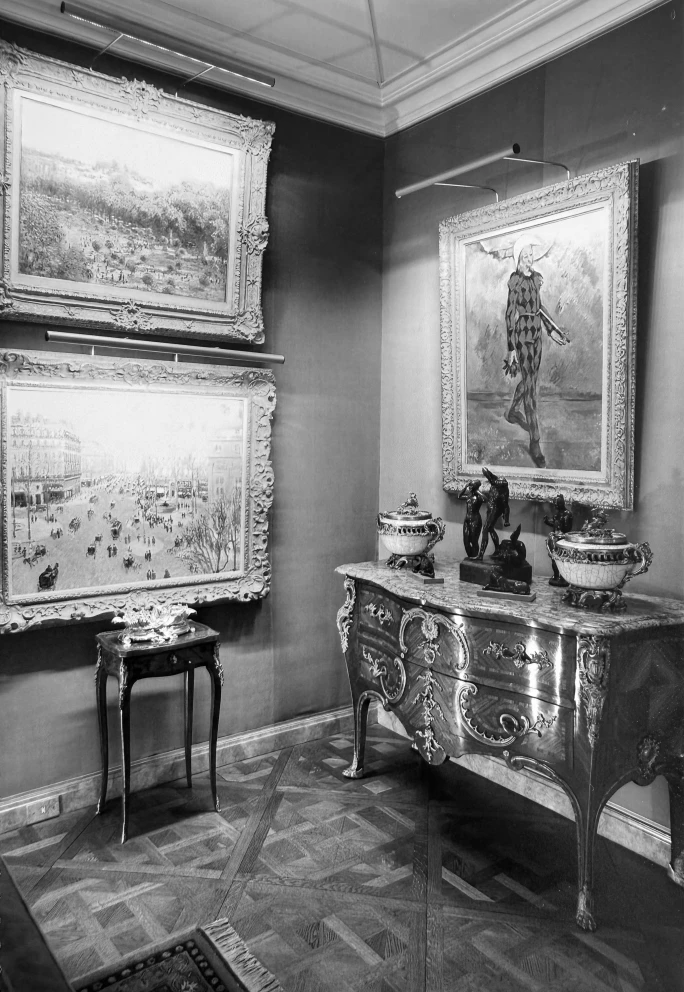
The collection now coming up for sale is made up of twelve Impressionist and Post-Impressionist paintings, with a combined estimated value of close to $450 million. Among them, Arlequin by Paul Cézanne also stands out — a portrait of his son dressed as a harlequin, from 1888–1890, valued at around $120 million. The auction, titled Legendary: The Blaquier-Arrieta Collection, will take place on Wednesday, November 18, 2026, at Sotheby's New York.
One interesting detail: Sotheby's official catalog lists the estimate as 'price on request,' although the house has communicated a projected valuation of around $180 million. If it reaches that figure, it would far exceed the current Van Gogh auction record: the $117.2 million paid for Verger avec cyprès at Christie's New York in November 2022, during the sale of the Paul G. Allen collection. And here is the irony: the painting that for fifty years was practically out of the public's reach could now become one of the most famous paintings on the international market.
Private Art: Collecting or Hiding?
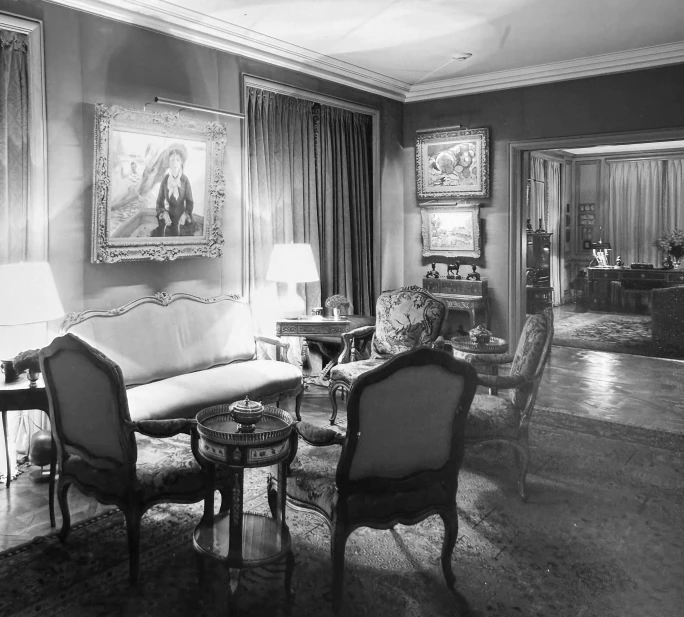
Carlos Pedro Blaquier and Nelly Arrieta de Blaquier were collectors of a generation that understood art as a deeply personal passion. During the 1960s and 1970s, they built an extraordinary collection, with works by some of the most important names in modern painting. Yet many of those pieces remained outside public exhibitions for decades.
Whoever buys a painting has the right to decide where to hang it, how to preserve it, and whether to lend it or not. A museum cannot demand that every owner turn their home into a public exhibition room. But there is also a cultural responsibility attached to owning certain works. A painting by Van Gogh, Monet, or Cézanne represents an important part of our visual history. When it remains hidden for fifty years, entire generations lose the opportunity to experience it firsthand.
Châtaigniers en fleurs had been considered for loan to the exhibition devoted to Gustave Fayet at the Fondation Louis Vuitton in Paris. The painting even appears in the exhibition catalog. However, the loan was withdrawn at the last minute and the work ended up headed for Sotheby's auction. The paradox is that the collector who bought the painting in 1909 was an enthusiastic promoter of modern art, while the work that once formed part of his collection spent half a century practically out of public view.
Is a Work Worth More When Everyone Can See It?
From a cultural point of view, the answer seems quite simple. A work on display in a museum can be contemplated by thousands or millions of people. It can be studied, photographed, reproduced in books, featured in documentaries, and inspire new artists. Its story is enriched with each generation that discovers it.
From a commercial point of view, the answer is less straightforward. Exclusivity can increase a piece's appeal. A painting that practically no one has seen for decades acquires an aura of mystery that can prove irresistible to major collectors. Scarcity, provenance, and the chance to acquire a museum-quality work are powerful arguments on the international market.
Hiding a masterpiece for decades can turn it into an event when it finally reappears, but exhibiting it publicly seems to have more demonstrable economic benefits. A study published in the academic journal Management Science, which analyzed more than one million art transactions, found that paintings with a record of documented exhibitions fetched hammer prices approximately 42% higher, on average, than those without such a history, after controlling for other market factors. The research also found significant premiums for works exhibited in museums and prestigious exhibitions.
This does not mean that hanging a painting in a museum automatically makes it more valuable, but it does suggest that public recognition, research, and institutional documentation help strengthen its commercial position. After half a century out of public view, the mystery of the Blaquier-Arrieta Van Gogh has become a powerful selling point, although the data suggest that sharing art with the world can be a considerably more profitable investment than some collectors imagine.
Van Gogh Never Imagined Such a Fortune

There is something profoundly human worth remembering amid all those millions, records, and bidders' phones. When Van Gogh painted those flowering chestnut trees in May 1890, he had only a few weeks of life ahead of him. He was working intensively in Auvers-sur-Oise, where he produced some of his most extraordinary paintings. He died on July 29 of that same year, at the age of 37.
It is hard to imagine that, as he applied those brushstrokes of green, pink, and blue, he could have suspected that, more than a century later, someone would be willing to pay a fortune for that canvas.
The good news is that the work has already met the public again: it was exhibited in Hong Kong in October 2026 and is part of the pre-auction exhibition at Sotheby's in New York, from November 7 to 17. It is an extraordinary opportunity to contemplate a painting that spent decades away from museum galleries.
Art Is Made to Be Enjoyed
At 32 Reales, we believe collecting has something wonderful about it: it allows a work to find a new home, a historic piece to become part of everyday life, and someone to enjoy it every morning when they get up, instead of merely contemplating it behind glass.
Of course, not all of us can buy a $180 million Van Gogh. But there is no need to. The art world is full of paintings, sculptures, prints, antiques, and extraordinary objects with fascinating stories that deserve to find a place where they can be appreciated.
A private collection can be a source of pride, but a shared work can become part of the collective memory. That is the idea we want to champion. After all, the best place for a work of art is where someone can pause for a moment, look at it, and feel that discovering it was worthwhile.


