

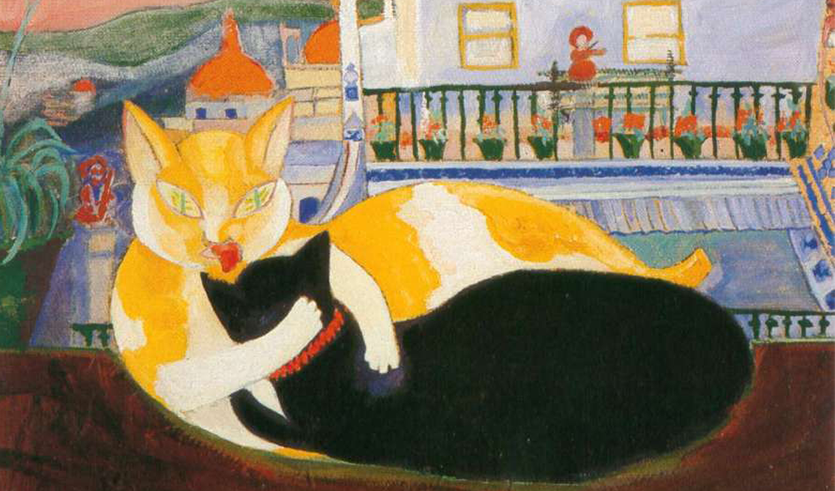
Some of the most original paintings in art history were made by people who never learned to paint the way the academies taught. While generations of artists spent years mastering perspective, anatomy, and the rules of composition, others simply picked up a brush and did things their own way. The result was a movement that baffled critics, won over the avant-garde, and proved that a painting could be extraordinary without following the rules of the craft.
What is naïve art? The beauty of painting without asking permission
The term naïve comes from the French naïf, meaning ingenuous or spontaneous. In the art world it is used to describe a form of expression characterized by its apparent simplicity, formal freedom, and a very particular way of representing reality.
Also known as ingenuous art or ingenuous painting, the naïve style is usually associated with self-taught artists who developed their own visual language outside academic education. Even so, it would be a mistake to think that any painting made by someone without art studies automatically belongs to this movement. Naïve art has recognizable characteristics that go far beyond the absence of professional training.
One of its most evident qualities is perspective. Instead of respecting the traditional conventions of depth and proportion, naïve artists usually build spaces in their own way. Buildings can look tilted, human figures can keep unrealistic proportions, and objects can appear on different planes with no fully logical spatial relationship.
Sometimes a figure in the background can be as big as a house, while a tree in the foreground barely reaches the height of a man. For a perspective teacher, that might be reason enough to fail a student, but for a naïve painter, it may simply be the right way to tell a story.
Color also plays a fundamental role. Intense tones, daring combinations, and relatively uniform areas of color are common. Details usually receive extraordinary attention: every leaf, window, flower, animal, or figure can be carefully outlined, creating compositions full of visual activity.
Another important characteristic is narration. Many naïve paintings seem like small windows onto complete worlds. They depict parties, markets, rural landscapes, family scenes, animals, religious celebrations, and everyday events. We often find a crowd of figures and small episodes that invite the viewer to travel through the painting with their eyes.
But perhaps the most interesting thing is its relationship with reality. A naïve artist does not necessarily try to reproduce the world as we see it, but as they remember it, imagine it, or feel it. Their painting can be descriptive and fantastic at the same time.
It is worth clarifying that naïve art is not synonymous with children's art, primitive painting, or folk art, although there are points of contact between these expressions. Nor is it a specific technique: it can be made in oil, acrylic, watercolor, gouache, or by other means.
In short, naïve art proposes a different way of looking. A way that, at times, turns out to be much more surprising than an academically perfect representation of things.
Henri Rousseau: the customs clerk who won over Picasso

Tiger in a Tropical Storm (1891) The Sleeping Gypsy (1897) The Snake Charmer (1907) The Dream (1910)
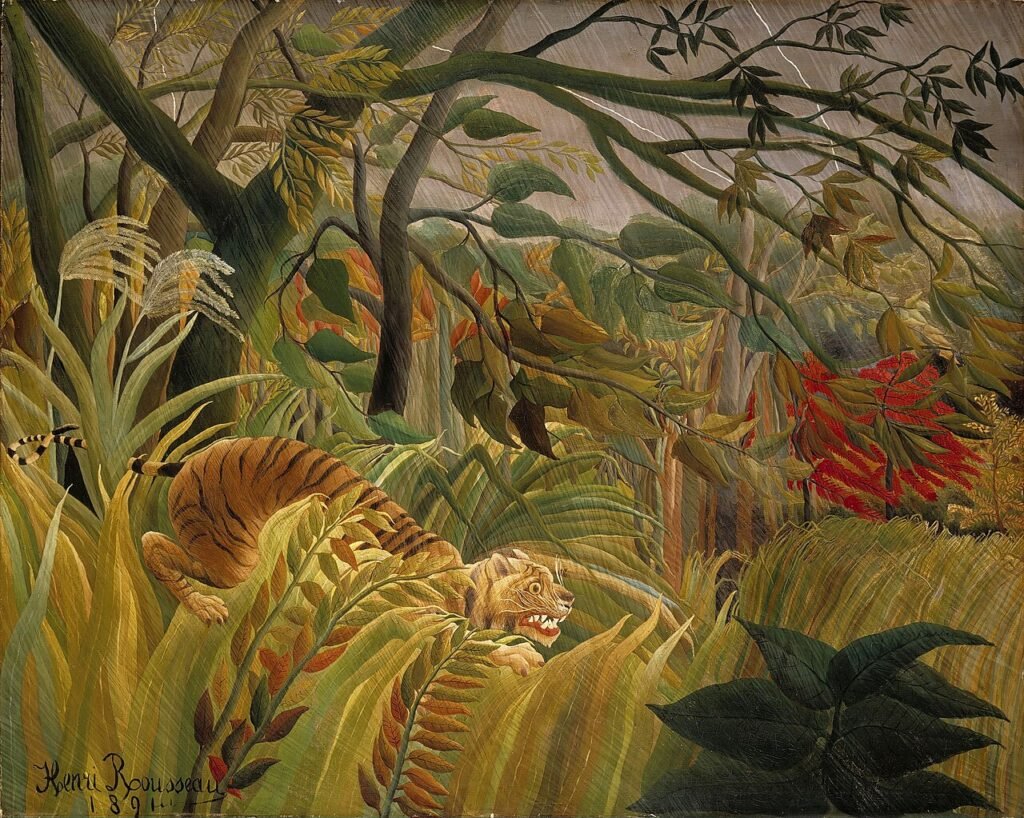
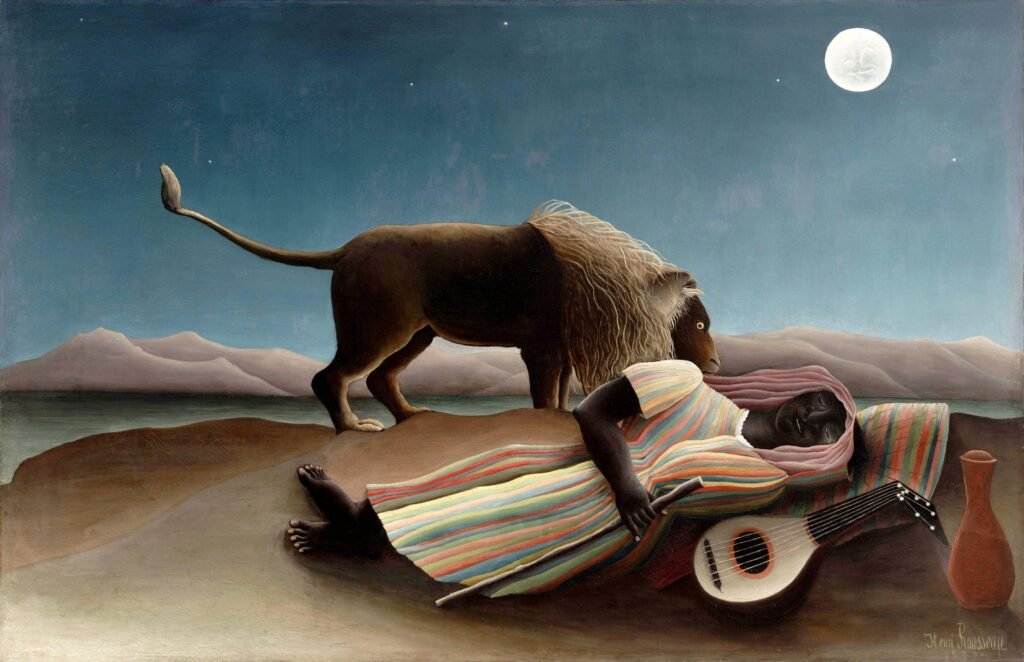
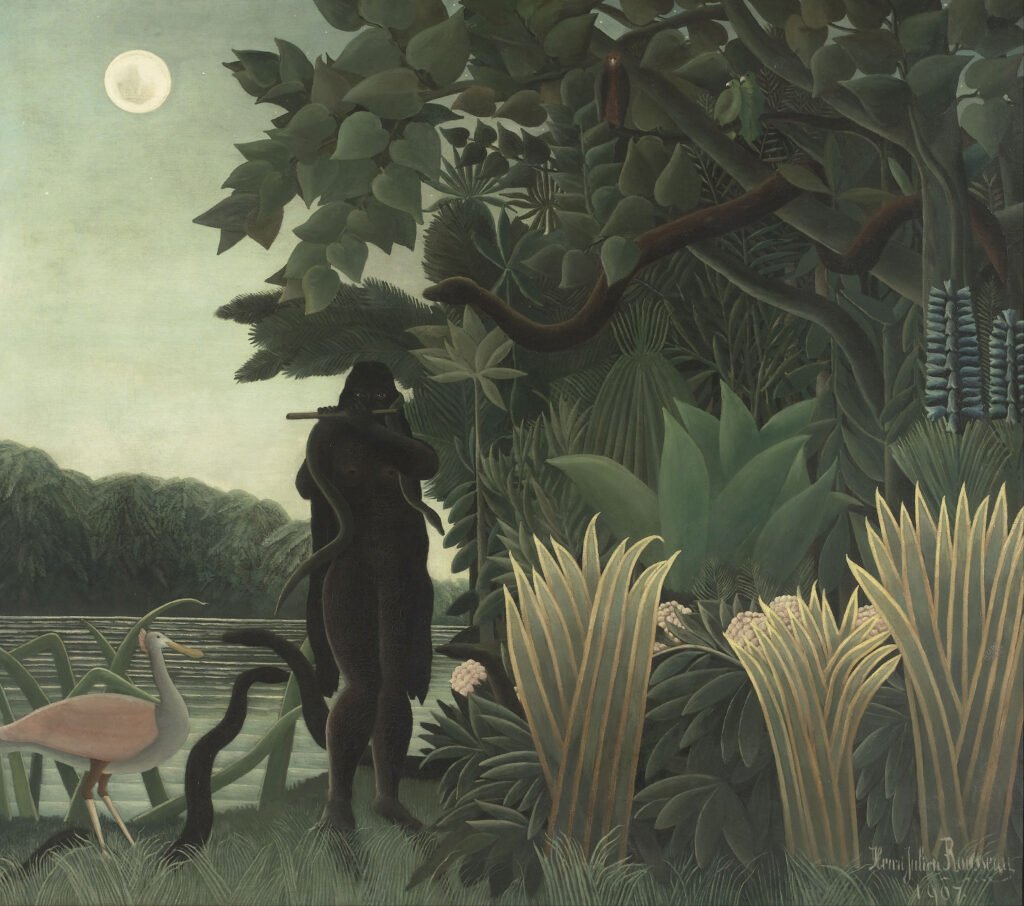
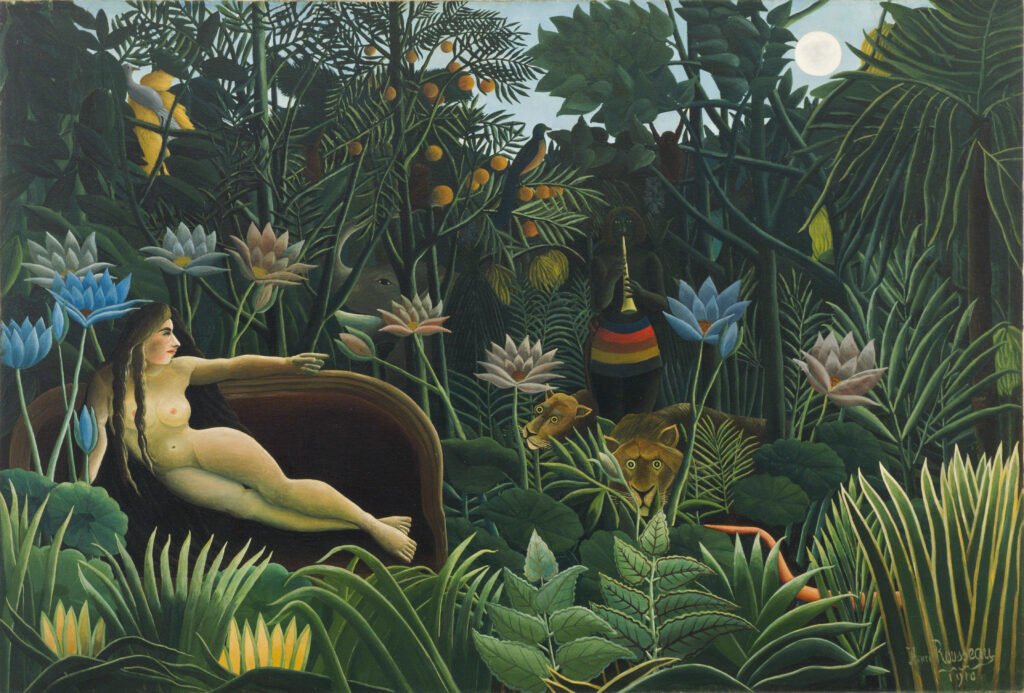
If there is one name inseparable from the origins of modern naïve art, it is Henri Julien Félix Rousseau (1844-1910), better known as Le Douanier Rousseau, a nickname he earned from his work in the Paris tax and customs service.
Rousseau was not born into a family of artists, and he received no formal education in painting. For much of his life he worked as a public employee, first in various administrative posts and later in the service that collected taxes on goods entering Paris.
His serious approach to painting came at around the age of forty. In 1884 he obtained a permit to copy works in the Paris museums, where he began to study the paintings of the great masters. He also visited botanical gardens, zoos, and exhibitions, places that would feed much of his imagination.
In 1886 he began taking part in the Salon des Indépendants, an exhibition open to artists who did not necessarily have the approval of academic institutions. His paintings attracted attention for their rigid figures, peculiar perspectives, and compositions that seemed to defy the conventions of European painting.
Traditional criticism was not exactly kind. Some considered his works clumsy, childish, or technically deficient. Others, however, found in them something academic painting seemed to have lost: a completely free imagination.
Rousseau gradually developed a very personal pictorial universe, populated by fantastic landscapes, motionless figures, and scenes of strange intensity. His famous tropical jungles are probably the best example.
The curious thing is that he had never traveled to a tropical jungle. He had imagined them from the vegetation he observed in the greenhouses of the Jardin des Plantes, the animals at the zoo, and the illustrations in books and magazines. His exotic landscapes were, in reality, constructions of his imagination.
Despite the mockery he received in his early years, Rousseau ended up associating with some of the most important figures of the Parisian avant-garde. Pablo Picasso, Guillaume Apollinaire, and other artists and intellectuals recognized the value of his work.
Rousseau died in Paris in 1910, without fully enjoying the recognition his work would later achieve. Today he is considered a fundamental figure of modern art and one of the great references of naïve painting.
Other great names in international naïve art
Although Henri Rousseau usually takes first place when we talk about this movement, naïve art has extraordinary representatives in different parts of the world. Some achieved international recognition after living lives completely removed from artistic circles.
|
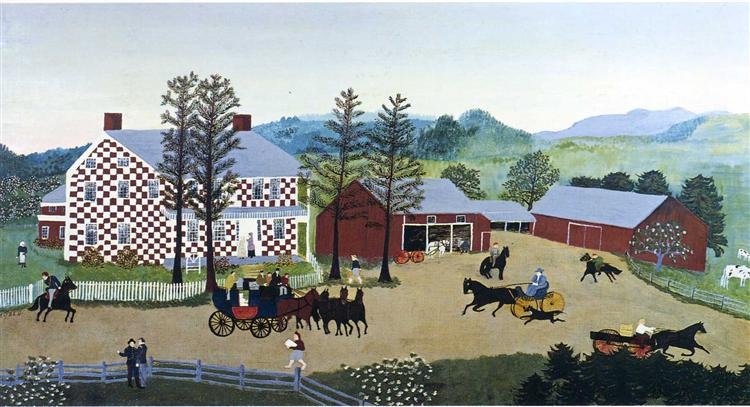
Grandma Moses (Anna Mary Robertson Moses, 1860-1961) |
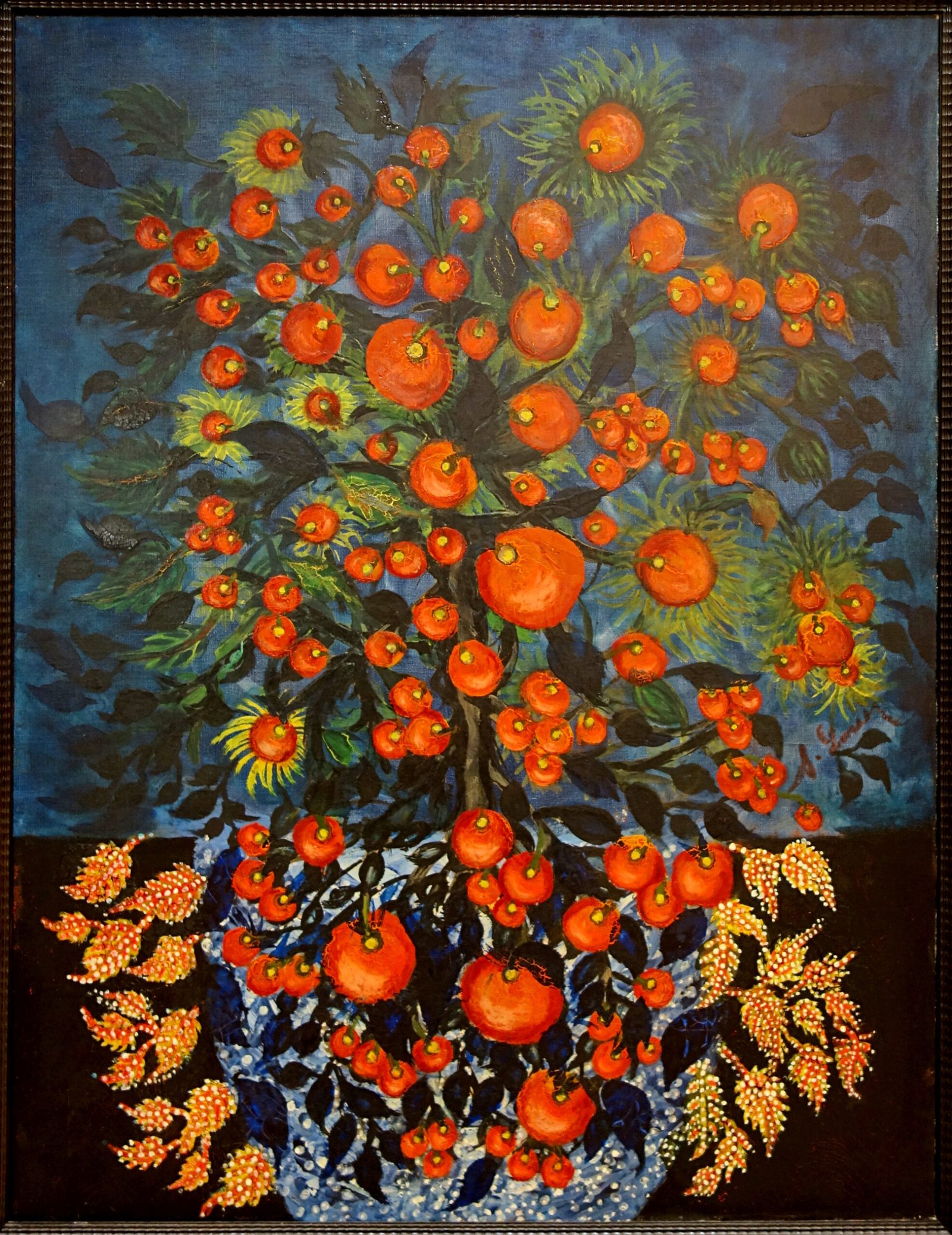
Séraphine Louis (1864-1942) |
 |
 |
|
Probably one of the best-known self-taught artists of the 20th century. She began painting seriously when she was around 78 years old, after giving up embroidery because of health problems. Her paintings depict rural American landscapes, harvests, weddings, parties, snowfalls, and community scenes. Her compositions are full of figures and activities that seem to tell stories from another era. Among her best-known works are “Sugaring Off” (1943) and “The Old Checkered House” (1942). Her success shows that it is never too late to discover an artistic vocation. |
She worked for much of her life as a domestic employee in France. She painted in her free time, developing compositions of flowers, leaves, and plant elements of an almost hypnotic intensity. Her work “The Tree of Life” (1928) is a good example of her visual universe: exuberant plant structures, vibrant colors, and a nature that seems to come alive. She was discovered by the German collector Wilhelm Uhde, who also played an important role in the recognition of Henri Rousseau. |
|
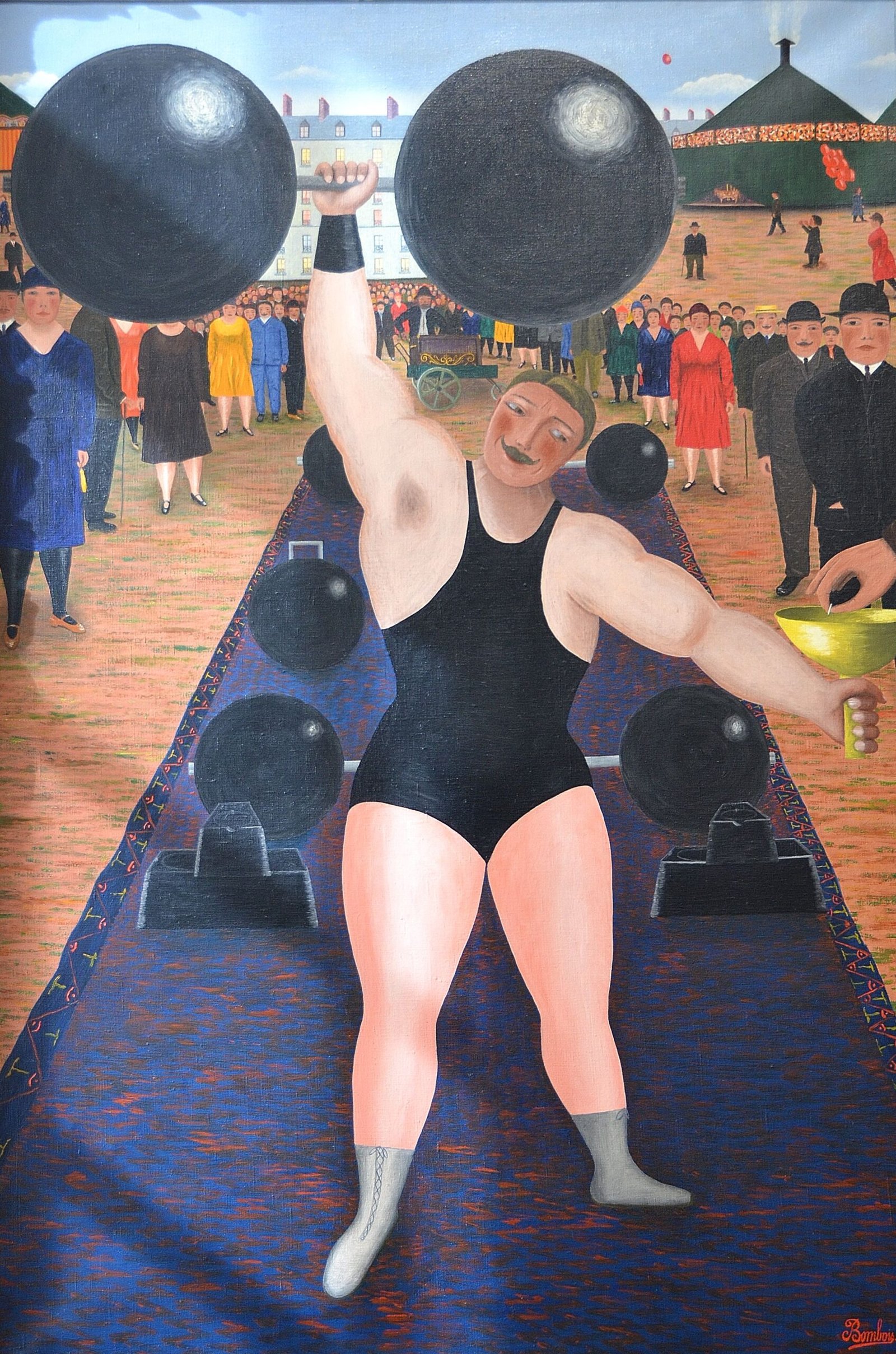
Camille Bombois (1883-1970) |
André Bauchant (1873-1958) |
 |
 |
|
Before devoting himself to painting, he worked as a laborer and a circus performer. That experience shows in his compositions, which feature wrestlers, acrobats, dancers, landscapes, and popular scenes. His figures have robust bodies and a monumental presence, while spaces are usually built using unconventional perspectives. |
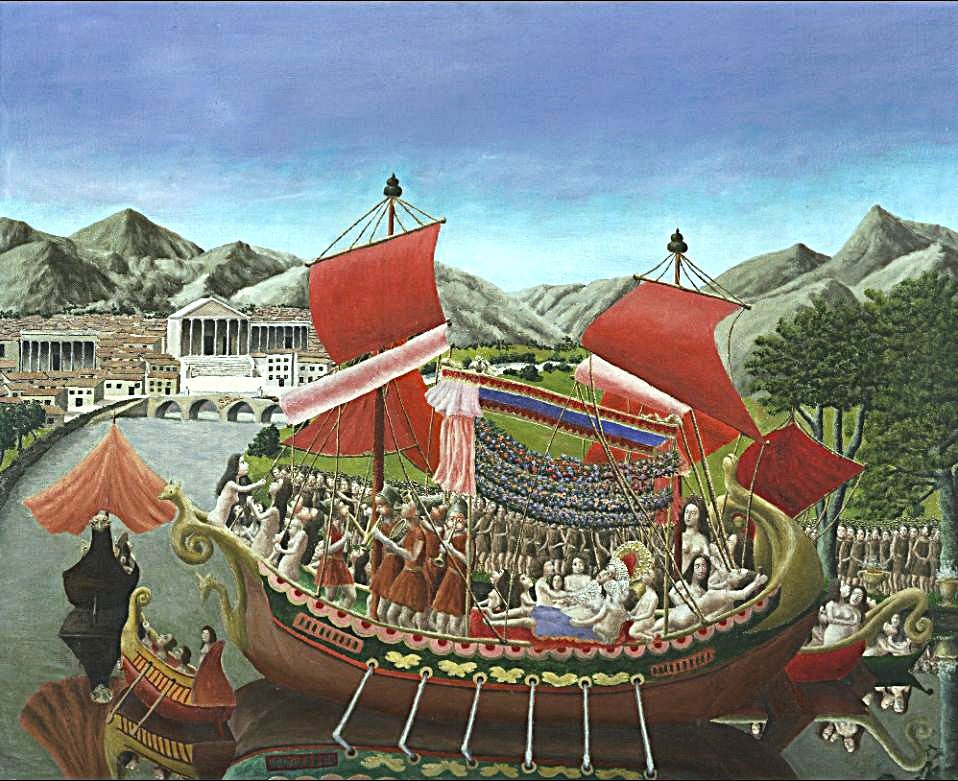
He worked as a gardener and began painting seriously after the First World War. His landscapes, mythological scenes, and historical compositions have a meticulous and fantastic appearance. His gardens look like theater stages, where nature is organized following a logic of its own. |
|
Orneore Metelli (1872-1938) 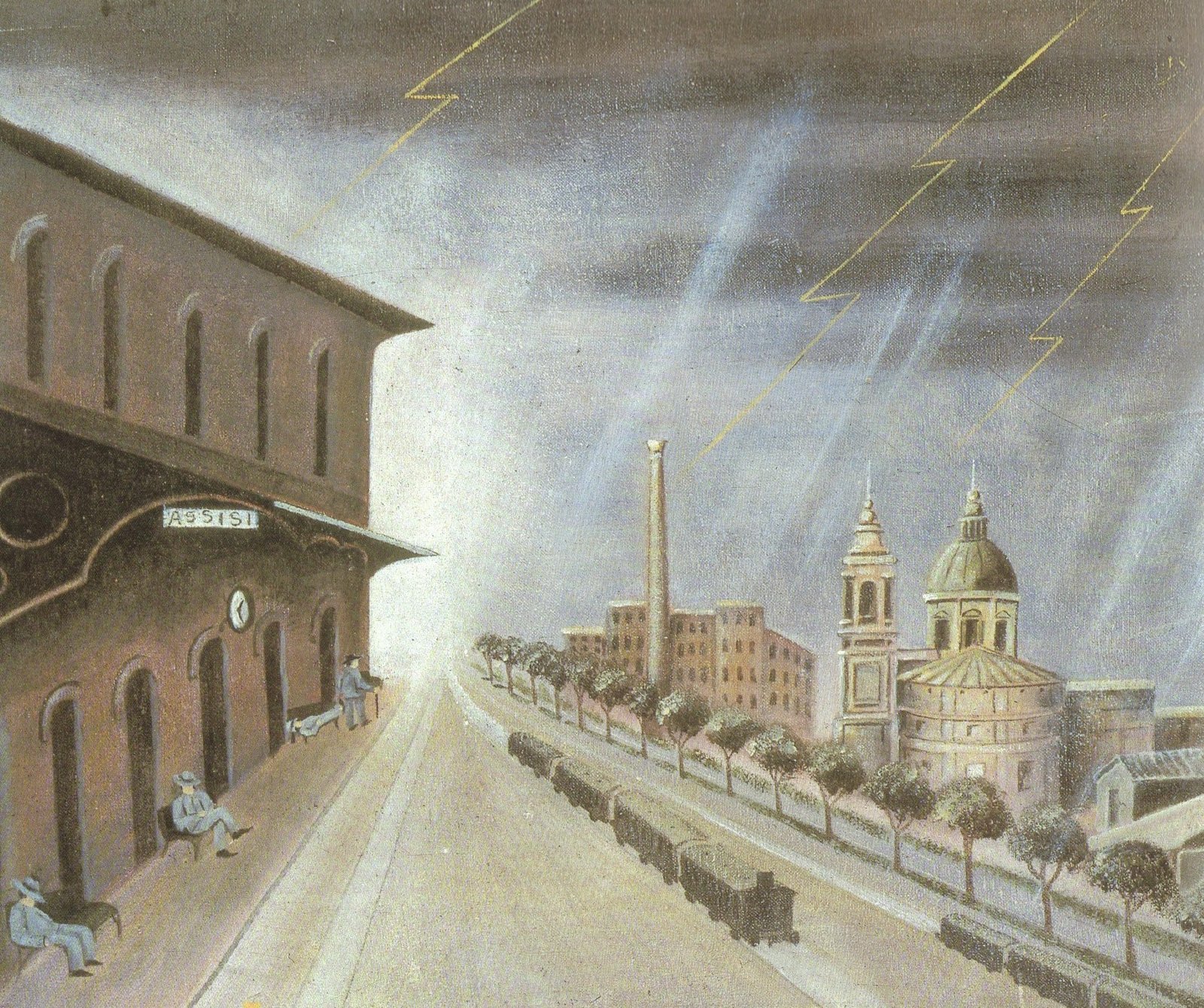 |
Italian and a shoemaker by trade, he began painting more intensely after leaving his trade. His works depict popular scenes, musicians, characters, and everyday situations through simplified figures and compositions of great charm. These artists show that naïve art does not belong to a single era, nationality, or tradition. It is a form of expression that appears when a creator develops a language of their own without necessarily submitting to academic conventions. |
From avant-garde Paris to the Mexican imagination
Museum of Contemporary Art of the University of Chile
Mexico had especially fertile ground for receiving and developing a sensibility close to naïve art. Long before the term became popular, there were traditions of self-taught painting, popular portraits, ex-votos, regional landscapes, and depictions of everyday life that shared some of its characteristics.
During the 19th century and the early 20th, many painters worked outside the academies and developed styles of their own from their immediate surroundings. In particular, the tradition of folk painters from Jalisco and other regions of the country shows that spontaneous, narrative painting had a history of its own in Mexico.
The 20th century was particularly interesting. While the great muralists sought to build a monumental image of national identity, other artists explored more personal, intimate, and fantastic paths.
One of the most interesting figures for understanding this dialogue is María Izquierdo (1902-1955). Born in San Juan de los Lagos, Jalisco, she developed a painting deeply linked to Mexican popular culture, traditions, the circus, altars, and everyday life.
Although she received artistic training at the Academy of San Carlos and should not be strictly classified as a naïve painter, some of her compositions share with this movement the use of intense colors, deliberately simplified spaces, and a poetic vision of reality.
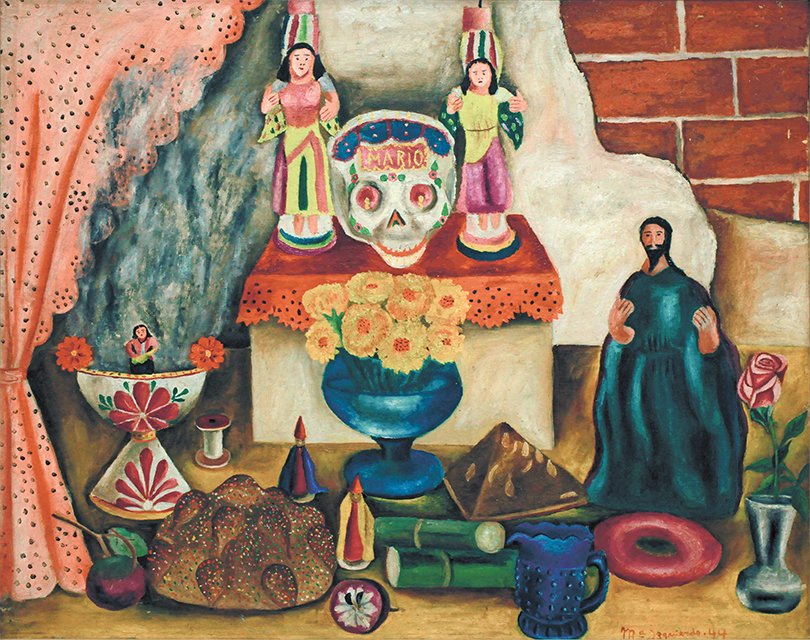
Works like “Altar of Death” (1944) show that ability to transform everyday objects and popular traditions into scenes of great visual and symbolic force.
Another Mexican artist considered part of the naïve style was Nahui Olin (1893-1978). Born Carmen Mondragón, she painted self-portraits with disproportionate green eyes and scenes of Mexican popular life: bullfights, weddings, circuses, and pulquerías. Dr. Atl gave her the name in 1922: in Nahuatl it means the Fourth Movement, the renewal of cosmic cycles. Her place in naïve art lies in her way of seeing, not in a lack of craft: she painted what she saw as she saw it, with broad brushstrokes, saturated colors, and without asking academic perspective for permission, just as Rousseau painted the jungle without ever setting foot in it. Her work took decades to be recognized: her first solo exhibition did not come until 1992, fourteen years after her death, and MUNAL brought together more than 250 pieces in the 2018 retrospective La mirada infinita.
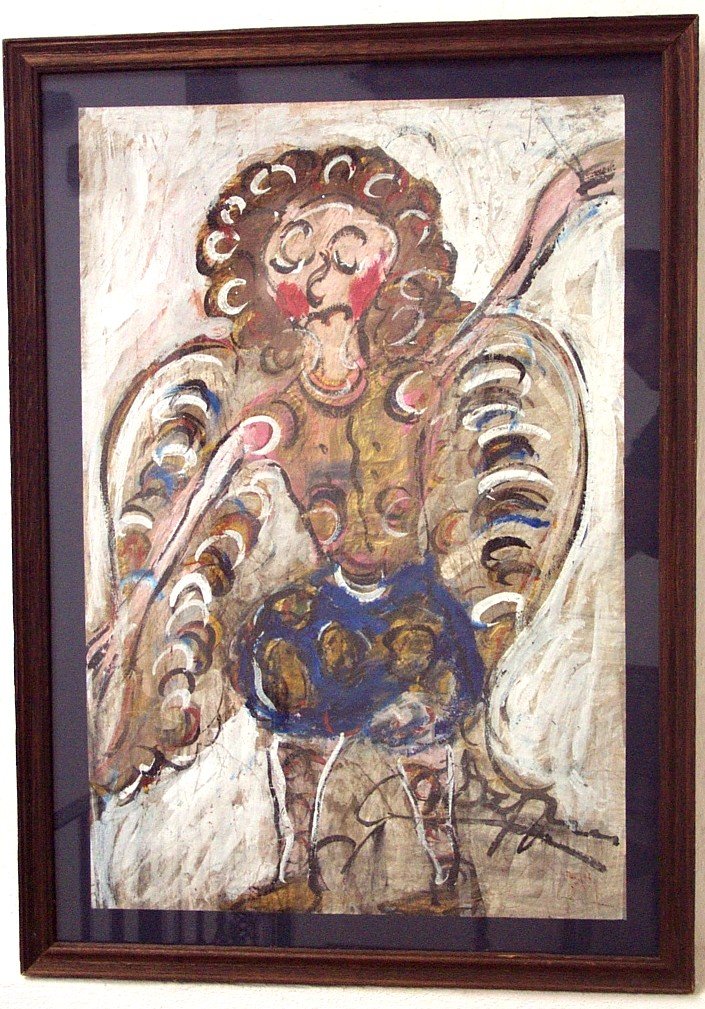
A fundamental figure in this conversation is Jesús Reyes Ferreira, known as Chucho Reyes (1880-1977). A painter, antiques dealer, and collector from Guadalajara, he was a self-taught creator who developed an extraordinarily personal language from simple materials, tissue paper, and intense colors.
His figures of horses, roosters, clowns, harlequins, and flowers have a spontaneity reminiscent of certain qualities of naïve art. His work had a considerable influence on artists and architects such as Juan Soriano and Luis Barragán.
Why should we take naïve art seriously?
Colección Oyler Maisterra, Pacific Palisades CA USA
For a long time, art history was dominated by a fairly rigid idea: to be a great painter you had to master certain techniques, know the rules of composition, and study the masters of the past.
Music, too, was dominated for centuries by virtuosos, until in the mid-seventies four young men in New York, despite their lack of musical skill, which they made up for with great energy, started the punk-rock movement with their band the Ramones. That genre taught us that you do not need remarkable virtuosity to reach the hearts of those of us who love art, and in the same way naïve art moves us without necessarily being work of advanced technique.
Of course, knowing perspective, anatomy, and color theory can greatly enrich an artist's work. But technical mastery does not guarantee imagination, personality, or sensitivity. And the absence of academic training does not mean a work lacks intention or depth.
A naïve painting can hide a complex vision of the world behind an apparent simplicity. It can be humorous, melancholic, critical, fantastic, or deeply autobiographical. Its value depends on the originality of its language, the strength of its composition, and its ability to convey an experience.
From a collector's point of view, this movement also offers a particularly interesting universe. Its artists have very different careers, their works are usually easily recognizable, and many compositions reveal new details each time you look at them.
And that is precisely what makes naïve art so fascinating: it reminds us that, sometimes, to discover a completely new way of seeing the world, you have to dare to look at it without following the instructions.
At 32 Reales, we believe that knowing these movements helps us better appreciate the diversity of artistic creation and discover works whose personality does not always fit into traditional categories. Because a truly interesting collection is also built with pieces that surprise us, make us smile, and make us look twice.


