

Before horror movies existed, Mexico already had stories capable of keeping anyone awake at night.

October is the month of haunted houses, Day of the Dead celebrations, black cats, and horror films. But before Frankenstein, Nosferatu, and Dr. Jekyll arrived in Mexican cinema, horror lovers would gather at night around a campfire to tell chilling stories for the purpose of scaring their friends and family. Curiously, the stories that frightened people the most were not ghost stories, but legends that came from real-life events. In Mexico at the end of the 19th century and the beginning of the 20th, there was an extraordinary chronicler of that dark side of everyday life: Jose Guadalupe Posada.
Posada worked for decades for popular printers such as Antonio Vanegas Arroyo, whose workshop produced broadsheets, corridos, news items, religious tales, and texts about news and events that circulated through streets, plazas, markets, and fairs. These were cheap publications, intended for a huge audience, and the image played a fundamental role: it allowed a largely illiterate public to follow a story. Research on this material has shown that crime news was presented with specific names, places, and dates. Sometimes it incorporated moralizing or clearly novelistic elements, which turned these stories into viral legends that endured for years, decades, and more. Here we gather five of the most unsettling criminal stories that were illustrated by Posada.
5. The Blood Spills: the bricklayers' brawl construction workers fight

On the scaffolding of a capital city undergoing Porfirian modernization, cheap alcohol and exhausting workdays were the perfect combination for tragedy. Benigno Castañeda and Severiano Montiel, two bricklayers known in the poor neighborhoods for their constant rivalry, shared work high up on a building under construction.
The boss had asked Severiano to take his pay to his coworker when he went up to the top of the scaffold. But when he arrived, Severiano did not give it to him, and Benigno, having seen from above that the boss had given him 2 envelopes with money, demanded it. A exchange of words unleashed the devil. On a fragile wooden scaffold, the argument escalated with work tools. Severiano grabbed a knife. In the struggle, the bucket of mortar fell, filling the air with slaked lime. Suddenly Benigno felt the metal of the knife open a wound in his throat, causing a deadly fall into the void that left an indelible trail on the cobblestone street.
The event froze passersby in the historic center. The image published by the workshop instilled panic about the dangerousness of the working world. Today, this engraving reminds us that the blood of the working class was the cost of modernity in the era of the great capital palaces.
4. The Robbery of La Profesa robo de la profesa

In February 1891, Plateros Street was one of the most elegant places in the capital. Near the La Profesa temple were some of the city's most important jewelry shops. Among them was the establishment of Tomás Hernández Aguirre, owner of the "La Profesa" jewelry store.
On the afternoon of the crime, when he was about to close, Hernández Aguirre received a supposed customer who asked about a watch. The man entered the establishment and shortly afterward other accomplices appeared. The three gentlemen were very well dressed, so the owner did not suspect their intentions, but the third man locked the door upon entering and Don Tomás noticed, which awakened his sense of alarm.
Hernández Aguirre, already elderly, was not a weak man. He tried to defend himself with the revolver he usually carried in his belt, but this time the weapon failed. The assailants, with their numerical advantage, managed to subdue him with blows and take him to the back room, where they forced him onto a divan. While one held him threatening him with a knife, the others emptied the display cases one by one. When they finished extracting the loot, the leader of the gang went for the companion guarding Don Tomás and realized that his hostage had a bloodstained shirt. Without mercy, the thief plunged the knife into his chest, thinking he could betray them for attempted homicide. The renowned jeweler ended up dead and the criminals fled with a considerable amount.
Among the accused were Gerardo Nevraumont, Nicolás Treffel, Antonio Sousa, Jesús Bruno Martínez, and Aurelio Caballero. The press followed the trial for months. The case became one of the great criminal trials of Porfirian Mexico, to the point that Carlos Roumagnac, one of the first Mexican investigators who tried to study crime with methods that claimed to be scientific, used it as one of his great cases of criminalistic study.
Bruno Martínez was executed, while other implicated individuals were sent to the San Juan de Ulúa prison. Gerardo Nevraumont ended up disappearing after throwing himself into the sea during a work assignment he was performing under custody. La Profesa revealed the fear that crime could produce in a city that presented itself as modern, orderly, and safe.
3. The Murder of Leandra Martínez by her brother Manuel

In 1891, the dust of the roads of Tacubaya mixed with the smell of sour pulque from the shops located a stone's throw from Mexico City. There lived Mateo Reyes, a pious and timid peon from a nearby ejido, a simple man who only wanted to pay a small debt for firewood to his neighbor Leandra. He found himself in the wrong place, at the exact second when a man's humanity breaks forever.
Leandra Martínez had saved penny after penny during five long years of servitude in the capital. She kept the fruit of her sweat in a small wooden chest under her bed: just a few silver coins, destined to buy a modest plot of land where she could spend her last years. But her brother Manuel was a man devoured by gambling debts and moonshine, a man of explosive temperament whose desperation and resentment rotted his head day by day.
That Sunday afternoon, the sun fell heavily on the adobe. Mateo arrived at the hut and found the door ajar. Peeking in, he witnessed the infernal argument. Inside there were no demons, only Manuel's raspy voice demanding the money from the chest and Leandra's desperate pleas begging him not to leave her in ruin.
Manuel, beside himself and blinded by fury and alcohol, grabbed his sister by the shoulder with the blind violence of an animal. Leandra tried to flee toward the door, extending her arms, but he drew a kitchen knife. Mateo wanted to scream, wanted to rush forward to stop him, but pure terror paralyzed him and he witnessed how the steel blade pierced Leandra's cotton blouse, hearing the horrifying dull crunch of metal breaking bones and becoming embedded against the poor woman's ribs.
In the end there was only the muffled sound of Leandra losing her breath, the unhinged gaze of her own brother upon realizing what he had just done, and the reddish puddle slowly spreading across the packed dirt floor. Mateo told the authorities what had happened, and when they arrived at Manuel's house to question him, they found him lifeless, hanging from one of the wooden roof beams. This story was told for years to try to deter men addicted to gambling and alcohol.
2. The Crimes of El Chalequero, throat-slasher of women. Murder of Mucia Gallardo

His given name was Francisco Guerrero Pérez, but in the cantinas and brothels of northern Mexico City they only knew him as "El Chalequero." They called him that because with his stature, strength, and character, he imposed his will "by force," with the cold impunity of a monster of flesh and blood.
For years, the course of the Consulado River was the dumping ground for the disfigured corpses of humble women and sex workers. And although there were suspicions that Guerrero Pérez could be the murderer, a dense and suffocating terror acted as an invisible shield for Francisco; no one spoke, no one reported, everyone looked down when they saw him pass.
Mucia Gallardo knew the entrails of that hell closely. She managed brothels in the area and for a long time shared business, robberies, and violence with El Chalequero himself. She believed that because she was his ally, his accomplice in the shadows, she was safe from the predator's claws. A mistake that cost her her life.
That night of thick fog, Mucia walked with him along the river. The stagnant water seemed a thirsty mirror of the reflection of a new moon that covered the fields with a cloak of shadow and darkness. Moments earlier, taking advantage of the gloom, they had robbed a couple who were unaware of the danger of walking at night through the areas of El Chalequero. Mucia demanded her share of the loot from her accomplice, raising her voice, with the confidence given by a false sense of security.
Francisco did not shout; he did not even change his expression. With the methodical coldness that recalled Jack the Ripper of London, he grabbed Mucia by the neck. She tried to fight, desperately scratching the man with whom she had shared countless sins, but in "El Chalequero's" eyes there was no rage: only a black and absolute void. In a brutally dry instant, he dragged her into the mud and with his machete, cut off her breath forever. The woman fell inert in the wet grass, with her arm extended to the sky imploring a mercy that never came, while the silhouette of the murderer faded among the brush and the mist of the river.
Mucia Gallardo's body finally loosened the tongues of a terrified town and brought the predator behind bars. Guerrero was prosecuted and sentenced to death, but the sentence was commuted to prison. He served part of his sentence in San Juan de Ulúa and regained his freedom years later. In 1908 he was arrested again for another murder and died in 1910 while imprisoned.
1. The Crimes of La Bejarano

In 1878, little Casimira Juárez died after being rescued from the hell that the woman who employed her as a domestic servant called home. Guadalupe Martínez Bejarano went to prison for a time, but a pardon due to her social connections with high officials returned her to the streets in 1886. The fatal error of justice was believing that evil matures with confinement, when in reality it only becomes hungrier.
By April 1891, in a house where the shadow seemed to thicken upon crossing the threshold, "La Bejarano" had under her care Crescencia Pineda, a girl of only twelve years old, but the wide walls and thick curtains drowned out the moans and desperate torments. Little Crescencia lived trapped in a systematic calvary of privations and merciless punishments.
One night, as punishment for having let dust accumulate on the dining room table and without a single trace of pity, the old woman unleashed on the girl's defenseless skin burns with red-hot irons and methodical mutilations. Enjoying others' pain with a cruelty devoid of any trace of soul, the "executioner woman" inflicted a torment so brutal that the child fainted from the pain.
Guadalupe, thinking she was dead, summoned the authorities with a story that the girl had arrived in that condition after a street brawl. The lady tried to pass herself off as a good Samaritan who tried to help the girl. She declared to the investigators that despite her efforts, she could not save her due to the severity of the wounds. She did not count on the fact that the doctors, upon taking her out of the house, would find vital signs and transfer her to the San Andrés Hospital as an emergency. With her last strength and her breath escaping through the traumatic pleuropneumonia caused by the blows, Crescencia managed to tell the truth of what happened to commissioner Santiago Sánchez before closing her eyes forever.
Bejarano, having the economic means to do so, hired the best lawyer in the city, who sought to sow doubts in the story of a dying girl, while accusing of prejudice a police corporation that seemed to have condemned his client without material evidence. It was in those days and in the cold cells of the Belén prison that a confrontation took place where her own son, Aurelio Bejarano, broke the blood mandate to point her out to her face, attesting to the sadistic tortures that his mother inflicted on the girls who worked in her house. The statements of her own son, tired of having to cover up his mother's diabolical behavior, were what finally sent the sadistic woman back behind bars.
Telling a thousand words through an picture
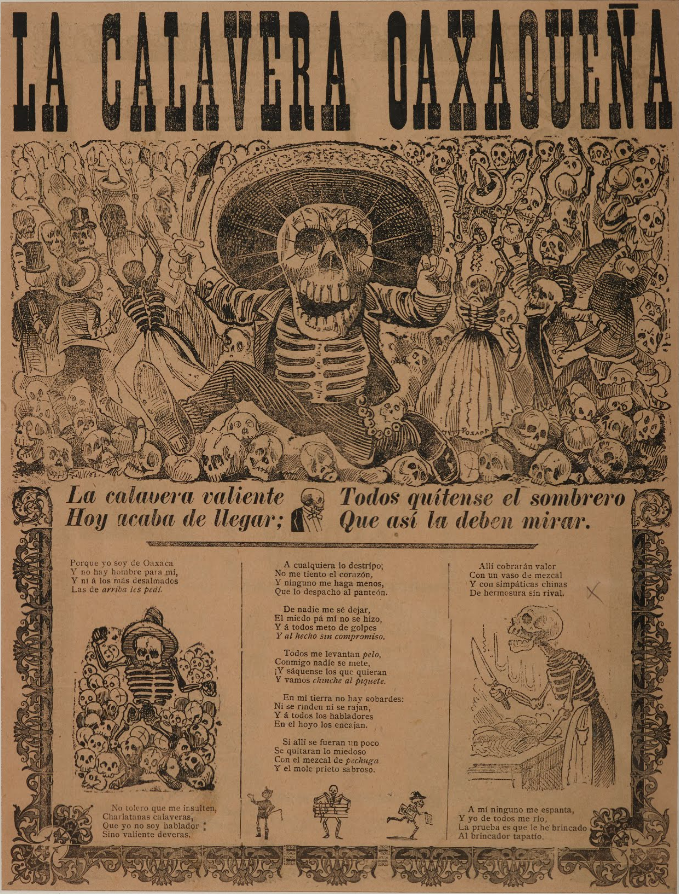
José Guadalupe Posada died in 1913, but his work survived because he knew how to record something that grand portraits and historical paintings rarely showed: the daily life of ordinary people.
Posada drew parties, dances, catastrophes, miracles, tragedies, criminals, lovers, workers, politicians, and the dead. He recorded humor and violence, the absurd and the terrible, the popular and the everyday. His images allow us to peer into a Mexico that was changing vertiginously and that, at the same time, continued to face problems as human as jealousy, greed, violence, fear, and injustice.
Perhaps that is his greatest legacy. José Guadalupe Posada turned the small and great tragedies of the Mexico of his time into visual documents capable of surviving more than a century. Today we can contemplate them from a museum, a collection, or an art exhibition, but at one time they circulated from hand to hand through the streets, accompanying stories that the public heard with a mixture of curiosity, morbid fascination, and horror.
